
Dry eye · causes
What causes dry eyes? Every cause, most common first
Most dry eye is not a shortage of tears. For most people, the oil glands in the eyelids are blocked, so the tears dry up in seconds. Here is how your tears work, the two kinds of dry eye, and every cause we see, most common first.
By Sohail Khan, Optometrist and Director, who has dry eye himself · Checked by Abra Arshad, Optometrist and Clinical Director · Updated 12 October 2026 · 11 min read
The most common cause of dry eyes is blocked oil glands in the eyelids (meibomian gland dysfunction, or MGD), which lets your tears evaporate between blinks. Less often, the eyes make too few watery tears. On top of that sit everyday causes: age, hormones, screens, heating and air conditioning, medicines, contact lenses, eye surgery, inflamed lids and some health conditions. Most people have two or three at once, which is why one drop rarely sorts it.
On this page
- How your tears work
- The two kinds of dry eye
- Cause 1: blocked oil glands (MGD)
- Causes 2 and 3: age and hormones
- Cause 4: screens
- Cause 5: heating, air con, wind and flying
- Cause 6: medicines
- Cause 7: contact lenses
- Cause 8: eye surgery
- Why I care about the cause
- Cause 9: lid and skin conditions
- Cause 10: general health conditions
- Causes 11 and 12: CPAP and lids that don’t close
- What about diet and omega-3?
- What you can do about each cause
- How we find out which causes are yours
- When you don’t need us, and when you do
- Questions people ask
How your tears work
Every time you blink, your lids spread a thin film over the front of your eye. It has three layers.
- Mucus, closest to the eyeHelps the tears stick to the eye instead of running off.
- Water, in the middleMade mostly by the tear gland above the outer corner of each eye. It feeds and washes the surface.
- Oil, on topMade by the meibomian glands, a row of tiny glands along the edge of each lid. The oil slows evaporation.
Blinking is the pump. Each blink squeezes out a little oil and lays down a fresh film. A healthy film stays smooth for 10 seconds or more. In dry eye it can break up in two or three, the surface dries, and you feel grit, burning or tiredness. More on what dry eye feels like.
The two kinds of dry eye
1. Evaporative dry eye (the most common)
You make enough water, but it doesn’t stay on the eye, because the oil layer is too thin or poor quality. The usual reason is MGD. One large clinic study found around 86% of people with dry eye showed signs of it (Lemp and colleagues, Cornea, 2012).
2. Low tear production (aqueous-deficient dry eye)
The tear gland makes too little water. This is less common. It is more likely with age, some medicines, conditions such as Sjögren’s, and after laser eye surgery.
Many people have both. The fixes differ: watery drops help low tear production more than blocked glands, which need the oil flowing again. That is why people try drop after drop with little change.
Cause 1: blocked oil glands (MGD)
In MGD the oil thickens, from something like olive oil to something more like butter. It stops flowing, the gland openings block, and the tears lose their protective layer. Inflamed lids, low blinking and hormones all push it along.
A gland that stays blocked long enough can shrink, and a gland that has gone does not come back. You can’t see this in a mirror, so we photograph the glands with an infrared camera.
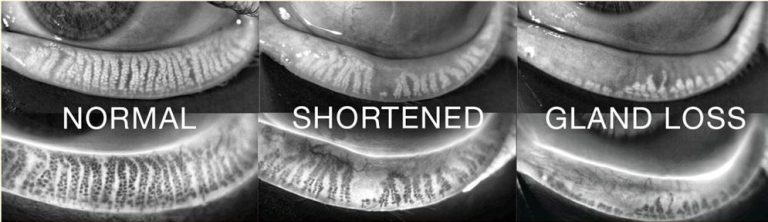
Glands that are blocked but still there can often be brought back to work. See how we treat blocked oil glands.
Causes 2 and 3: age and hormones
Age. From your forties, the oil glands tend to work less well, the tear gland makes a little less water, and the eye becomes slightly less sensitive, so you blink less.
Hormones. Sex hormones help keep the oil glands healthy, and their levels change with age. This is one reason dry eye is more common in women, and why many notice it around the menopause. Some types of HRT have been linked with dry eye too. Read dry eyes and the menopause.
Cause 4: screens
When you concentrate on a screen you blink about a third as often, and many blinks are half blinks where the lids don’t meet. Less oil is pumped out and more of the eye is left uncovered. That is why so many people are fine in the morning and gritty by the afternoon. See how screens dry your eyes.
Want to know which causes are yours?
Every treatment starts with a free consultation with one of our optometrists. We help you find what is causing it, and if treatment isn’t right for you, we say so before anything starts.
Cause 5: heating, air con, wind and flying
Anything that dries or moves the air over your eyes speeds up evaporation: central heating in winter, air conditioning, car fans blowing at your face, wind and cold, smoke, and the very dry air in an aeroplane cabin. With blocked glands, they tip a borderline eye into a sore one.
Cause 6: medicines
Common culprits are antihistamines, some antidepressants, some blood pressure tablets (beta-blockers and diuretics), isotretinoin for acne, which affects the oil glands directly, and eye drops with preservatives used for years, such as some glaucoma drops. Never stop a prescribed medicine because of dry eye. Ask your GP or pharmacist, as there is often an alternative. The full list is in medicines that cause dry eyes.
Cause 7: contact lenses
A lens sits in the middle of the tear film and splits it, so the film in front breaks up faster. Over the years lens wear can also make the eye less sensitive and change the oil glands. A different lens or wearing time often helps. See why your contact lenses dry out.
Cause 8: eye surgery
Laser eye surgery (LASIK and LASEK) disturbs nerves in the front of the eye that trigger blinking and tears. Cataract surgery can also bring on or worsen dry eye for weeks or months. It usually improves as the eye heals, though not always fully, especially if the glands were already blocked. Read dry eyes after cataract or laser surgery.
Why I care about the cause
I have dry eye myself. It is why I stopped wearing contact lenses, and why laser eye surgery was never an option for me. So I know how tempting it is to keep buying a new drop and hope.
When I set up the dry eye clinics at our five practices, the first rule was simple: find the cause before treating anything. Two people with the same gritty eyes can need completely different things.
Cause 9: lid and skin conditions
Anything that inflames the lid edge tends to block the glands.
- Blepharitis, inflamed lid edges with crusty lashes. It and MGD often feed each other. See blepharitis symptoms and treatment.
- Demodex, tiny mites in the lash roots. In large numbers they leave waxy cuffs on the lashes and irritate the lids. See eyelash mites (Demodex).
- Rosacea, which reddens the cheeks and nose, very often affects the lids and glands too, sometimes before the skin. See rosacea and dry eyes.
Cause 10: general health conditions
Sometimes dry eye is a sign of something elsewhere in the body.
| Condition | How it dries the eyes |
|---|---|
| Sjögren’s | The immune system attacks the tear and saliva glands. The clue is dry eyes with a dry mouth. |
| Rheumatoid arthritis, lupus | Inflammation can affect the tear glands, and some people develop Sjögren’s too. |
| Thyroid eye disease | The eyes can become more prominent and the lids pull back, so more of the eye is exposed. |
| Diabetes | It can reduce feeling in the front of the eye, so you blink less and make fewer reflex tears. |
If you have dry eyes with a dry mouth, joint pain, or eyes that seem more prominent, tell your GP as well as us.
Causes 11 and 12: CPAP and lids that don’t close
CPAP. Air leaking from the top of a sleep apnoea mask can blow across your eyes all night. A better mask fit usually helps. See CPAP and dry eyes.
Lids that don’t fully close. Some people sleep with their eyes slightly open without knowing. The clue is eyes that are worst first thing. Lids can also close poorly after Bell’s palsy, eyelid surgery, or with thyroid eye disease. A bedtime gel often helps, but we need to see it to know.
What about diet and omega-3?
Here is the honest version. The biggest trial so far, the DREAM study (New England Journal of Medicine, 2018), gave people with dry eye high-dose omega-3 or an olive oil capsule for a year. Both groups improved about the same. Omega-3 did no better than the dummy capsule.
A 2023 review of nutrition and the eye surface (the TFOS Lifestyle reports) calls the wider evidence mixed. So we don’t tell people omega-3 will fix their dry eye, and there isn’t good evidence that diet is behind most dry eye.
What you can do about each cause
| Cause | What usually helps |
|---|---|
| Blocked oil glands | Warm compresses and lid cleaning, drops made for oil gland problems, then in-clinic treatment such as IPL light therapy if needed |
| Low tear production | Preservative-free drops, tiny plugs that keep your own tears on the eye, sometimes prescription drops from your GP or eye doctor |
| Screens and surroundings | Breaks, full blinks, vents away from your face, a drop before a flight |
| Medicines | Ask your GP or pharmacist about alternatives |
| Contact lenses | A different lens, material or wearing time |
| Blepharitis, mites, rosacea | A daily home lid routine, then in-clinic lid cleaning if it keeps coming back |
| Health conditions | Your GP for the condition, us for the eyes |
| CPAP, poor lid closure | Mask fitting and a bedtime gel |
For everyday drops, see which eye drops suit which dry eye. Every treatment and price is on our dry eye clinic page.
How we find out which causes are yours
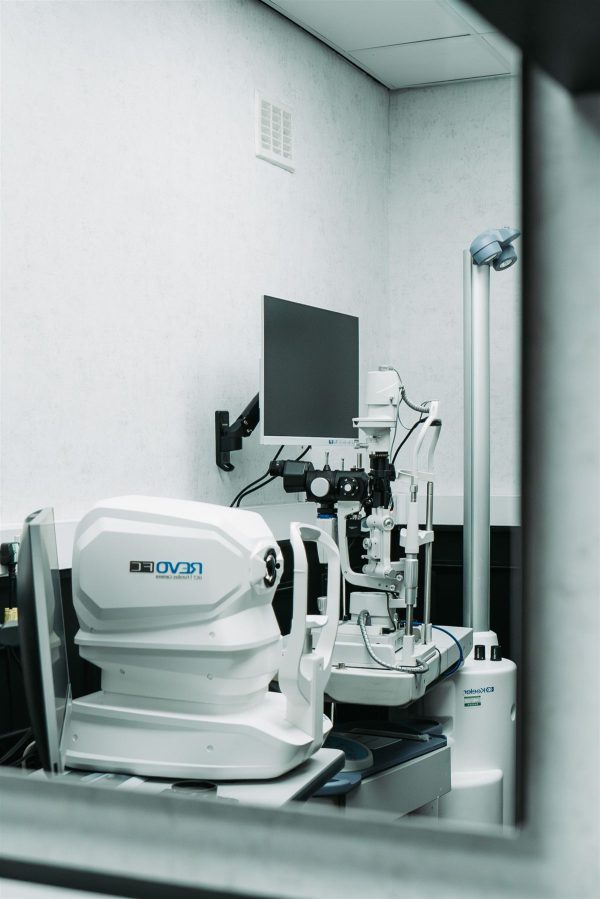
Every treatment starts with a free consultation, where we ask about your screens, work, sleep, medicines, lenses and health. When we examine your eyes, we look at your lids and lashes under the microscope, check how quickly your tear film breaks up, and can photograph your oil glands. Then we tell you plainly what is causing it.
Not sure it is dry eye at all? Try our 60-second dry eye check.
When you don’t need us, and when you do
If your eyes feel dry only now and then and are fine by the next morning, a preservative-free drop and screen breaks are usually enough. Come and see us if it is there most days, if drops only help briefly, or if it affects your lenses, work, driving or sleep.
A painful red eye, sudden blur, strong light sensitivity, a painful eye with contact lenses, or an injury or chemical splash needs help the same day: call one of our practices, NHS 111 or go to A&E. See the urgent signs.
Questions people ask
Why are my eyes so dry all of a sudden?
Look for what changed: a new medicine, the heating going on, more screen work, new lenses, recent surgery or a flight. If it doesn’t settle in a couple of weeks, have it checked. A sudden painful red eye needs seeing the same day.
Can allergies cause dry eyes?
Allergies make eyes itchy and watery, and antihistamine tablets can dry them, so the two often overlap. Itching is the main clue that allergy is part of it.
Will dry eye go away once the cause is gone?
Sometimes, for example when a medicine is changed or the eye heals after surgery. Blocked oil glands usually need ongoing care. See does dry eye go away?
- Most dry eye is blocked oil glands, so the tears evaporate too fast
- A smaller group make too few watery tears, which needs different treatment
- Age, hormones, screens, medicines, lenses, surgery and inflamed lids all add to it
- Most people have two or three causes, which is why one drop rarely sorts it
- Find your causes first, then treat them
Find the cause, then treat it
Most people start with EyeRelief, and it starts with a free consultation, at any of our five practices: Cheadle, Heald Green, Middleton, Winsford and Heckmondwike. No referral needed.
- Bron AJ et al. TFOS DEWS II Pathophysiology Report. The Ocular Surface, 2017.
- Gomes JAP et al. TFOS DEWS II Iatrogenic Report. The Ocular Surface, 2017.
- Lemp MA et al. Distribution of aqueous-deficient and evaporative dry eye in a clinic-based patient cohort. Cornea, 2012.
- DREAM Study Research Group. n−3 fatty acid supplementation for the treatment of dry eye disease. NEJM, 2018.
- Markoulli M et al. TFOS Lifestyle: Impact of nutrition on the ocular surface. The Ocular Surface, 2023.
- NICE Clinical Knowledge Summaries. Dry eye disease.