
Dry eye · eyelash mites
Demodex eyelash mites: what they are, and when they need treating
Mites in your eyelashes sounds alarming. In fact almost everyone has them, and usually they do no harm. Here is how to tell when there are too many, and what brings the numbers down.
By Sohail Khan, Optometrist and Director, who has dry eye himself · Checked by Abra Arshad, Optometrist and Clinical Director · Updated 12 October 2026 · 11 min read
Demodex are microscopic mites that live in the eyelash roots and the tiny glands of the lids. Most adults have some, and that is normal. When numbers build up they cause itchy lid edges, often worst in the morning, red lids, and waxy “collars” at the base of the lashes. A lid routine twice a day, often with a low-strength tea tree oil product, and a lid clean in clinic if needed, bring them back under control. It takes weeks, not days.
On this page
- What are Demodex mites?
- When the numbers cause trouble
- The signs of eyelash mites
- The tell-tale sign: collarettes at the lash base
- Demodex, rosacea and blepharitis
- How an optometrist checks for mites
- Look at the lids, not just the eyes
- What you can do at home
- Pillowcases, make-up and mascara
- Are eyelash mites catching?
- Treatment in clinic
- How long does it take?
- When you don’t need us, and when you do
- Questions people ask
What are Demodex mites?
Demodex are tiny relatives of spiders, about a third of a millimetre long. Two kinds live on people:
- Demodex folliculorum lives in the follicle each eyelash grows from, often several to one lash, feeding on skin cells and oil.
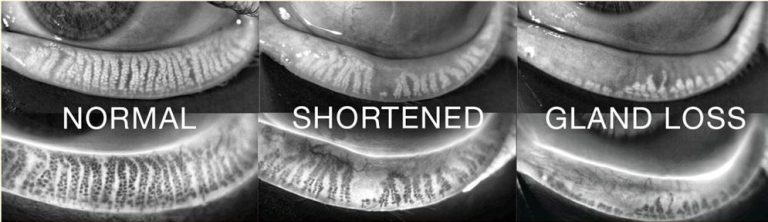
- Demodex brevis is shorter and lives deeper, in the oil glands beside the lashes and in the meibomian glands, the row of glands along the lid edge that put oil into your tears.
They are most active at night, when they crawl out, mate on the lid and go back in to lay eggs. Their life cycle is roughly two to three weeks, which is why treatment has to run for several weeks: long enough to catch each new generation as it hatches.
Most adults have them, and that is normal
Mites become more common with age, and by later life nearly everyone has them. Having them is not a sign of poor hygiene. In small numbers they cause no symptoms at all. The problem is numbers. When the population grows and irritates the lid, it is called Demodex blepharitis, one of the common causes of blepharitis.
When the numbers cause trouble
More mites are linked with older age, rosacea, oily skin, blocked oil glands, a weaker immune system and eye make-up left on overnight.
In large numbers, mites block the follicles and glands, and their waste builds up at the lash base. When they die inside the follicle they break down, releasing their contents and bacteria they carry, and the lid reacts with inflammation.
Inflamed lids make poorer oil, so the tears dry out too fast. That is why mites so often come with dry eye. Demodex brevis inside the meibomian glands adds to blocked oil glands (MGD), and has been linked with repeated styes and chalazia.
The signs of eyelash mites
- My lid edges itch, especially when I wake upItching of the lid margin, often worst first thing, after the mites’ busy night.
- There’s a sort of dandruff on my lashesSmall waxy flakes wrapped around the lash base. The most telling sign of all.
- My lids look red and sorePink or red lid edges, sometimes slightly swollen.
- My eyes feel gritty, and it keeps coming backDry eye that settles with drops, then returns when you stop.
- I’m losing lashesMites at the root can loosen lashes or make them grow out of line.
- Lid wipes help, then it comes straight backOrdinary wipes clean the surface but don’t reach mites in the follicle.
Many overlap with dry eye. Read how to tell blepharitis and dry eye apart.
The tell-tale sign: collarettes at the lash base
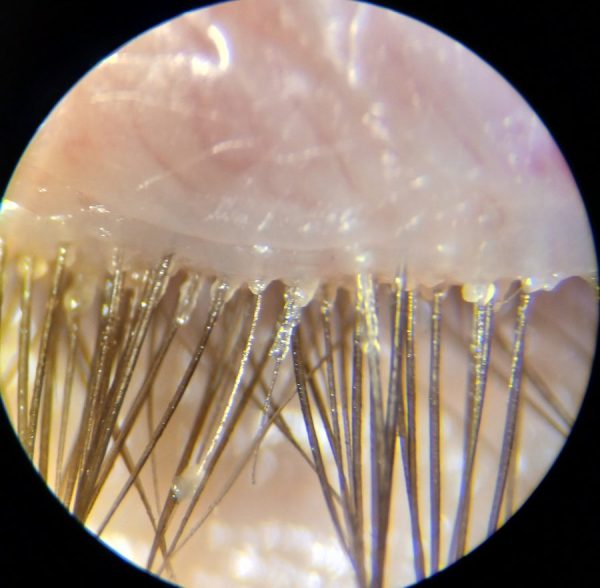
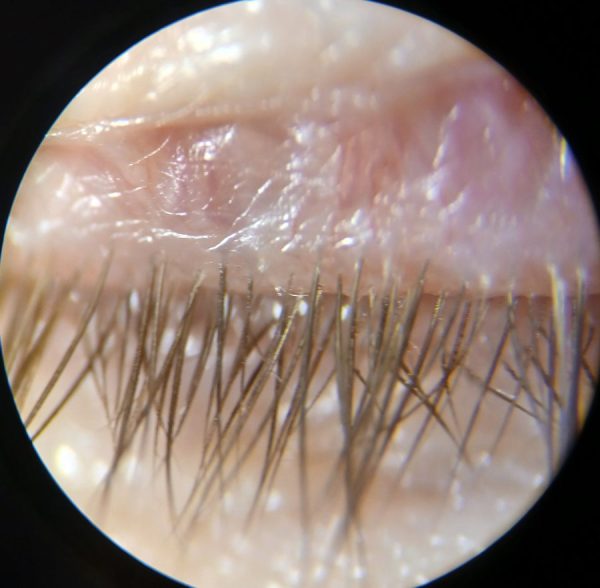
The sign that points most strongly to Demodex is cylindrical dandruff, also called collarettes: little sleeves of clear or cream, waxy material wrapped around the base of a lash, like a tiny collar. They are mite waste, skin cells and eggs pushed out as the lash grows. Other kinds of blepharitis tend to give loose, flaky crusts instead.
To look yourself, use a magnifying mirror in good light, look down and gently lift the upper lid. Collarettes on many lashes make mites likely.
Demodex, rosacea and blepharitis
People with rosacea tend to have more Demodex on their skin, and it often reaches the eyes as ocular rosacea: red lid edges, blocked glands and sore, dry eyes. If you have rosacea and crusty lids, have your lashes checked, because treating the lids and skin together usually works better than either alone.
How an optometrist checks for mites
We look at the lid edge with a slit lamp, the microscope used in every eye examination, and ask you to look down so the base of the upper lashes comes into view. Sometimes we gently turn or remove a lash to see mites directly, but usually the collarettes are enough. We also check the oil glands and tear film, because mites rarely come alone.
Crusty lashes that keep coming back?
Every treatment starts with a free consultation with one of our optometrists. We talk through your symptoms, explain whether mites could be part of it, and if treatment isn’t right for you, we say so.
Look at the lids, not just the eyes
I have dry eye myself, and I set up the dry eye clinics at our five practices. Lids get overlooked. People try drop after drop when the problem is sitting at the base of the lashes. Mites are nothing to be embarrassed about. Finding them often explains why nothing else has worked.
What you can do at home
Clean the lid edges twice a day
Warm the lids, then clean along the lash line, right at the base of the lashes, top and bottom. Our step-by-step home lid routine shows exactly how. A warm compress also helps blocked oil glands, though it does not kill mites.
Tea tree oil products
Tea tree oil is the most studied home treatment for eyelash mites. The part that seems to do the work is terpinen-4-ol, and many lid wipes, foams and gels made for Demodex contain a low strength of one or the other.
The honest evidence: studies show these products reduce collarettes and itching for many people. But a Cochrane review in 2020 found the trials small and mixed, so how well tea tree oil works is still uncertain, and lower strengths are kinder to the eye. A 2021 review found side effects more common with tea tree oil than other treatments, though all were mild.
Using tea tree oil safely
- Only use a product made for eyelids. Never put neat tea tree oil or a home-made mix near your eyes.
- Keep the eye closed and wipe along the lash line, never across the eye.
- Mild stinging is common for a minute or so, and usually eases after the first week.
- If it gets in the eye, rinse with plenty of clean, cool water.
- Stop and get advice if stinging is strong or lasts, or the lids swell, itch more or get a rash. Some people are allergic to it.
- Keep going for as long as your optometrist advises, usually several weeks.
Hypochlorous acid sprays reduce bacteria on the lid, but evidence that they reduce mites alone is limited.
Pillowcases, make-up and mascara
- Wash pillowcases weekly on a hot wash, and use your own towel and face cloth.
- Take eye make-up off every night, right to the lash line.
- Replace mascara and eyeliner about every three months, start fresh ones when treatment begins, and never share them.
- Go easy on lash-line make-up and pause eyelash extensions while treating mites. Both make the lash base hard to clean.
- Wash your face morning and night, as mites live on the skin too.
Normal washing is enough; no need to throw out bedding.
Are eyelash mites catching?
Demodex can pass between people through close contact and shared pillows, towels or make-up. That is how nearly everyone ends up with them. But since most adults already have mites, “catching” them makes little difference. Whether they cause trouble depends on your own lids and skin. If partners both have symptoms, treat together.
There is no need to stay off work or keep children off school. Pets are not the source: the mites on dogs and cats are different species and do not settle on people.
Treatment in clinic
If home care is not enough, or collarettes are heavy, we clean the lids in the chair. A soft, spinning micro-sponge lifts the collarettes and debris from the base of every lash, reaching what wipes and drops cannot. It feels like a tickle, not pain. Read more about in-clinic lid cleaning.
If the oil glands are blocked too, we treat them as well. When the lids have been inflamed for a long time, your optometrist may suggest IPL light therapy to calm the lid edge. You go home with a daily routine, and we check again after a few weeks.
If you also have rosacea, your GP can treat the skin. Ivermectin cream, licensed in the UK for facial rosacea, acts partly on Demodex, but is not licensed for the eyelids.
Every treatment starts with a free consultation. See every treatment and price on our dry eye clinic page.
What about lotilaner (Xdemvy)?
Lotilaner eye drops, sold as Xdemvy, were approved in the United States in 2023 as the first drop made to treat Demodex blepharitis. At the time of writing (October 2026) they are not licensed in the UK, so they cannot be prescribed here. If that changes, we will update this page.
How long does it take?
| When | What usually happens |
|---|---|
| First week | Some stinging from tea tree products. Itching may not change yet. |
| Two to four weeks | Morning itching usually starts to ease. Lids look less red. |
| A few weeks more | Collarettes clear for many people. A good time to check again. |
| After that | A simple daily lid routine, to stop numbers building back up. |
Mites return if the routine stops completely. The aim is low numbers, not zero, as with most lid and dry eye problems. See does dry eye go away?
When you don’t need us, and when you do
If your lids itch now and then, with no crusting or redness, gentle lid cleaning twice a day is often all you need.
Come and see us if collarettes keep coming back, your lids stay red and itchy despite cleaning, you keep getting styes or losing lashes, or your contact lenses dry out and your lids are crusty.
Get seen the same day if you have:
- A painful red eye, especially just one
- A sudden drop in vision that doesn’t clear when you blink
- Strong light sensitivity
- A red, painful eye while wearing contact lenses (take the lens out)
- Pain after a chemical splash or injury
These are not typical of mites. Call any of our practices for an urgent appointment, or NHS 111. If it is severe and you can’t reach anyone, go to A&E. See all the urgent eye signs.
Questions people ask
Can you see eyelash mites?
Not with the naked eye. What you can sometimes see are collarettes, the waxy collars mites leave at the base of the lashes.
Will eyelash mites go away on their own?
Small numbers never go away, and don’t need to. Numbers high enough to cause symptoms usually need several weeks of daily lid care to come down.
Can eyelash mites cause blurry vision?
Indirectly. Inflamed lids make the tears unstable, so vision can blur, then clear when you blink. See blurry vision from blepharitis. Blur that doesn’t clear needs checking the same day.
Is Demodex blepharitis treated on the NHS?
Blepharitis is usually managed with daily lid cleaning at home. In-clinic lid treatments are not usually available on the NHS, which is why we show every price up front.
- Most adults have Demodex mites in their lashes, and that is normal
- Trouble starts when numbers build up: itchy lids, worst in the morning, red lid edges and dry eye
- Waxy collars at the lash base (collarettes) are the tell-tale sign
- Lid cleaning twice a day, often with a low-strength tea tree product, is the backbone of treatment; never use neat oil
- Allow several weeks, then keep up a simple daily routine
Want your lashes checked?
Most people start with EyeRelief, and it starts with a free consultation, at any of our five practices: Cheadle, Heald Green, Middleton, Winsford and Heckmondwike. No referral needed.
- NHS. Blepharitis.
- NICE Clinical Knowledge Summaries. Blepharitis.
- Savla K et al. Tea tree oil for Demodex blepharitis. Cochrane Database of Systematic Reviews, 2020.
- Martínez-Pulgarín DF et al. Interventions for Demodex blepharitis and their effectiveness: a systematic review and meta-analysis. Contact Lens and Anterior Eye, 2021.
- Gaddie IB et al. Lotilaner ophthalmic solution 0.25% for Demodex blepharitis (Saturn-2). Ophthalmology, 2023.