Abra & Co

Dry eye · outlook

Does dry eye go away? An honest answer

It depends on why you have it. Dry eye from a cold, a flight or a new tablet often clears on its own. Dry eye from blocked oil glands usually doesn’t, but it can be controlled so well that you stop thinking about your eyes.

By Sohail Khan, Optometrist and Director, who has dry eye himself · Checked by Abra Arshad, Optometrist and Clinical Director · Updated 12 October 2026 · 11 min read

The short answer

Short-term dry eye often goes away once the trigger has gone: a cold, a run of long screen days, a short course of medicine, or eye surgery (this can take a few months). Long-term dry eye, usually from blocked oil glands in the eyelids, rarely switches off for good. It is managed, not switched off. With the right treatment most people get to eyes that feel normal most days. The earlier it is treated, the better the outlook.

On this page
  1. Is dry eye permanent? It depends on the cause
  2. How your tears work, and why that matters
  3. Dry eye that usually clears on its own
  4. Dry eye that is usually long-term
  5. Why earlier is better: the part that can’t be undone
  6. My own dry eye hasn’t gone away either
  7. What a realistic good outcome looks like
  8. How long does dry eye treatment take to work?
  9. Why dry eye comes back: flare-ups and triggers
  10. Keeping it under control
  11. When you don’t need us, and when you do
  12. Questions people ask
It depends on the cause

Is dry eye permanent? It depends on the cause

“Dry eye” is a description, not one disease. It means the tear film over the front of your eye isn’t doing its job, and many things can cause that. The cause decides the outlook far more than how bad your eyes feel today.

What is behind it Does it go away?
A cold, flu or hay fever Usually yes, within a week or two of getting better
A dry office, heating, a long flight Yes, often by the next day
A short course of medicine Often yes, once the course ends
Cataract or laser eye surgery Usually within a few months; up to a year after laser surgery
Blocked oil glands (meibomian gland dysfunction, MGD) Rarely on its own. Controlled with treatment and a home routine
Age, the menopause, rosacea, blepharitis Long-term. Managed, and often much improved
Sjögren’s and other immune conditions Long-term. Managed with your GP or hospital team

Many people have more than one at once. The full list is in what causes dry eyes.

How your tears work, and why that matters

Your tear film has three layers, each made somewhere different.

  • Mucus, next to the eye. It helps the tears stick and spread.
  • Water, the bulk of the tears, from the tear gland above each eye.
  • Oil, a very thin layer on top, made by dozens of tiny meibomian glands in each eyelid. Every blink squeezes a little out, and it stops the water evaporating.

Short-term dry eye is usually about the surroundings: dry air, fewer blinks, a temporary dip in tears. Remove the trigger and healthy glands catch up.

Long-term dry eye is usually about the glands, most often the oil glands. The oil thickens, like butter instead of olive oil, the openings block, and the water evaporates in seconds. A struggling gland doesn’t mend because you had a quiet week.

Dry eye that usually clears on its own

After a cold or flu

Illness, decongestants and antihistamines reduce your tears for a while. It usually settles within a week or two.

After eye surgery

Surgery cuts tiny nerves in the front of the eye that tell it to make tears. They grow back slowly. After cataract surgery, dryness often settles within a few months. After laser surgery it can take up to a year, and longer if you had dry eye beforehand. See dry eyes after cataract or laser surgery.

Short-term medicines

When a short course ends, the dryness often lifts. With long-term tablets it may last as long as you take them. Never stop a prescribed medicine without talking to your GP. See medicines that can cause dry eyes.

A dry office, a flight, a heavy screen week

Dry air, and blinking less on a screen, dry the eye. It usually clears by the next morning. If it is there every working day, take it seriously, because long screen hours can help tip healthy glands into blocked ones.

Dry eye that is usually long-term

Blocked oil glands (MGD)

The most common cause of dry eye by far. Left alone it rarely reverses. Treated, it usually improves a lot. That is what treatment for blocked oil glands is for.

Age and hormones

Tears and oil both fall with age, and the oil glands respond to sex hormones. That is one reason dry eye often starts around the menopause. It doesn’t “pass”, but it responds well to care.

Rosacea and inflamed lids

Rosacea inflames the lid edges and keeps the glands blocking. Rosacea, blepharitis and eyelash mites can all be calmed right down, and they tend to return if the routine stops.

Sjögren’s and other immune conditions

The immune system attacks the tear glands. It is lifelong. Dry eyes with a dry mouth and aching joints are worth mentioning to your GP.

Why earlier is better: the part that can’t be undone

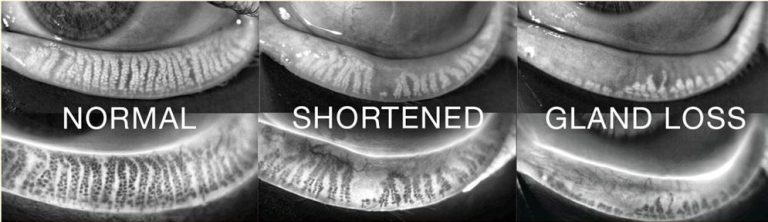
Blocked oil glands can usually be got working again. But a gland that stays blocked long enough shrinks and eventually disappears. Once it has gone, nothing brings it back.

Infrared photographs of eyelid oil glands: normal, shortened and gland loss
Infrared photos of the oil glands inside the eyelid. Left: healthy glands. Middle: shortened glands. Right: glands that have been lost. You can’t see this in a mirror, which is why we photograph them.

After a year of gritty eyes, most glands are usually still there to work with. After many years, more may be lost, and the aim becomes protecting what is left.

It isn’t an emergency, but if symptoms are there most days, sooner is better. Not sure yours count? The 60-second dry eye check gives you a score.

From Sohail

My own dry eye hasn’t gone away either

I have dry eye myself. It is why I stopped wearing contact lenses, and why laser eye surgery was never an option for me. So I won’t tell you it disappears for good, because mine hasn’t.

But “not gone” and “a problem” are not the same thing. Most days I don’t think about my eyes. That is the realistic goal, and it is why I set up the dry eye clinics at our five practices.

Want to know which kind yours is?

Every treatment starts with a free consultation with one of our optometrists. We talk through what may be causing your dry eye and how much it is likely to improve, and if treatment isn’t right for you, we say so before anything starts.

What a realistic good outcome looks like

For long-term dry eye, a good outcome usually means:

  • Most days, you don’t notice your eyes at all.
  • You reach for drops now and then, not every hour.
  • Flare-ups still happen, but they are milder, shorter, and you know what to do.
  • On the photos, your glands are no worse than last time.

It usually doesn’t mean never needing treatment again. If anyone promises that one treatment will end it forever, be wary.

How long does dry eye treatment take to work?

Drops work in minutes. Treatments that change the cause take weeks, so don’t give up too early.

Treatment What it does When people usually notice a difference
Lubricating drops and gels Top up and soothe the surface Minutes, but it wears off. Used regularly, the surface often calms over 2 to 4 weeks
Daily warm compresses and lid massage Melt the thick oil so the glands can empty Usually a few weeks of doing it every day
Lid cleaning at home Clears crusts, bacteria and mites A few weeks, longer for mites
In-clinic gland and lid treatment Clears glands and lid edges more thoroughly than home care Often some relief after the first visit; best judged after the full course
IPL light therapy Calms lid inflammation and helps the thick oil flow A course of visits about two weeks apart. Some notice a change after the first; best judged after the full course
Prescription anti-inflammatory drops or tablets from your GP or eye doctor Calm the inflammation behind long-term dry eye Often several weeks to a few months

Preservative-free drops are gentler if you use drops often. See how to choose eye drops for dry eyes. If your oil glands are the problem, drops for blocked oil glands work differently from plain watery ones.

IPL and red light therapy and in-clinic lid cleaning each have their own guide. Every treatment starts with a free consultation, and every treatment and price is on our dry eye clinic page.

Why dry eye comes back: flare-ups and triggers

Even well-controlled dry eye has bad weeks. A flare-up doesn’t mean treatment failed. Common triggers:

  • Winter. Central heating indoors, cold wind outside.
  • Hay fever season. Rubbing, and antihistamine tablets that dry the eyes.
  • Deadlines and long screen days. Fewer blinks, more evaporation.
  • Travel, poor sleep, illness and alcohol.
  • Long days in contact lenses. See why contact lenses dry out.
  • Dropping the routine. The big one. People feel better, stop the compresses, and months later the glands block again.

Get ahead of yours: restart compresses before the heating goes on.

Keeping it under control

It is mostly small daily habits.

  1. A warm compress and lid massage every day, even when your eyes feel fine.
  2. Clean the lid edges if you have blepharitis. Our home lid routine shows how. If crusty lashes keep returning, read about eyelash mites.
  3. Blink on purpose during screen work, and look away every 20 minutes.
  4. Keep fans and car vents off your face.
  5. A yearly check, or sooner if things slip. We photograph the glands to see they are holding steady.

Some people need more in-clinic treatment from time to time; others manage at home.

When you don’t need us, and when you do

You probably don’t need us if your dry eye has a clear short-term cause and settles within a few days of it going. A drop and some rest are enough.

Book if your eyes are uncomfortable most days, it has lasted more than a few weeks, drops only help briefly, or it gets in the way of work, driving or contact lenses. Not sure it is dry eye? See dry eye symptoms.

Get seen the same day if you have:

  • Real pain, or strong light sensitivity
  • A sudden drop in vision that doesn’t clear when you blink
  • One very red, painful eye
  • A painful red eye in a contact lens wearer (take the lens out)
  • A chemical splash or injury to the eye

Call any of our practices, or NHS 111. If it is severe and you can’t reach anyone, go to A&E. See signs that need help today.

Questions people ask

Can dry eye be fixed for good?

Short-term dry eye, from a cold, a flight, a short course of medicine or recent surgery, often clears completely. Long-term dry eye, usually from blocked oil glands, is managed rather than switched off for good. Managed well, most people have eyes that feel normal most days.

How long does dry eye last?

From a clear trigger like a cold or a flight, usually days to a couple of weeks. After cataract surgery, often a few months, and after laser surgery up to a year. Dry eye from blocked oil glands, age or hormones tends to be long-term, with good and bad spells.

Can dry eye make you go blind?

Ordinary dry eye very rarely harms your sight. Severe dry eye, particularly with immune conditions such as Sjögren’s, can damage the surface of the eye, which is why it needs proper care. Pain, strong light sensitivity or a sudden drop in vision should be seen the same day.

The short version

  • Dry eye from a cold, a flight, a short medicine course or surgery often clears on its own
  • Dry eye from blocked oil glands, age or hormones is usually long-term: managed, not switched off
  • Glands that stay blocked for years shrink and don’t grow back, so earlier is better
  • Drops help within minutes; treatments that fix the cause take weeks
  • Flare-ups are normal. A daily routine and a yearly check keep them small

Find out what your outlook really is

Most people start with EyeRelief, and it starts with a free consultation, at any of our five practices: Cheadle, Heald Green, Middleton, Winsford and Heckmondwike. No referral needed.

Sohail Khan, Optometrist and Director. Sohail is an optometrist and the director of Abra & Co. He has dry eye himself, which is why he stopped wearing contact lenses and why laser eye surgery was never an option for him. He set up the dry eye clinics at our five practices. Checked by Abra Arshad, Optometrist and Clinical Director. We review this page every year, or sooner if the evidence changes.
Sources

  1. Craig JP et al. TFOS DEWS II Definition and Classification Report. The Ocular Surface, 2017.
  2. Jones L et al. TFOS DEWS II Management and Therapy Report. The Ocular Surface, 2017.
  3. Gomes JAP et al. TFOS DEWS II Iatrogenic Report (dry eye from medicines and surgery). The Ocular Surface, 2017.
  4. Nichols KK et al. The International Workshop on Meibomian Gland Dysfunction: executive summary. Investigative Ophthalmology & Visual Science, 2011.
  5. NICE Clinical Knowledge Summaries. Dry eye disease.
  6. NHS. Dry eyes.


Select your practice


Signup to receive a £50 gift voucher for your first visit at Winsford Eyecare

Signup and Get a £50 gift voucher on first visit

Signup to receive a £50 gift voucher for your first visit at Cheadle

Signup and Get a £50 gift voucher on first visit

Signup to receive a £50 gift voucher for your first visit at Middleton

Signup and Get a £50 gift voucher on first visit

Signup to receive a £50 gift voucher for your first visit at Heald Green

Signup and Get a £50 gift voucher on first visit

Signup to receive a £50 gift voucher for your first visit at Heckmondwike

Signup and Get a £50 gift voucher on first visit