
Scleral and mini scleral lenses
Scleral lenses are large rigid gas permeable contact lenses that rest on the sclera, the white of the eye, and vault over the cornea without touching it. The space underneath is filled with saline, which smooths out an irregular cornea and keeps the front of the eye bathed in fluid. They give clear, stable vision to eyes that glasses and ordinary contact lenses cannot correct.
Large rigid lenses that vault over the cornea on a layer of saline, for eyes ordinary lenses cannot correct.
★★★★★ 4.9 from 600+ Google reviews
Specialist fitting at our Middleton practice, 36 Long Street. Ask at any of our five practices and we book you in.
A new, smooth front surface for the eye.
An irregular cornea bends light unevenly, which no pair of glasses can fully correct. A scleral lens doesn’t try to follow that shape. It lands on the white of the eye and arches over the cornea, leaving a gap that is filled with sterile saline before the lens goes in. The saline fills every irregularity underneath, so the eye now looks through the smooth front of the lens instead of the uneven cornea.
Clear optics
The fluid layer neutralises irregular astigmatism, which is why scleral lenses can give sharp vision on a cornea that is badly distorted.
Stability
Resting on the white of the eye, the lens hardly moves when you blink, so vision stays steady through the day.
Comfort and protection
Nothing touches the cornea, and the front of the eye sits in fluid all day, which also helps some severe dry eye and surface conditions.
The same principle, in different sizes.
| Lens | Approximate size | Where it rests | Usually for |
|---|---|---|---|
| Corneal RGP | About 9 to 11 mm | On the cornea | Milder irregularity, small central cones |
| Mini scleral | About 15 to 18 mm | Just beyond the cornea, on the white of the eye | Most keratoconus, irregular corneas, people who couldn’t tolerate RGP lenses |
| Full scleral | 18 mm and over | Further out on the white of the eye | The most irregular corneas, grafts, severe surface disease |
A bigger lens is not automatically better. The shape of your cornea, the shape of the white of the eye where the lens lands, and how easily you can handle the lens decide the size.
Eyes that need more than a lens from a box.
Irregular corneas
Keratoconus, pellucid marginal degeneration, and corneas changed by laser surgery (ectasia). Keratoconus explained →
After surgery or injury
Corneal grafts, scarring after injury or infection, and corneas left irregular after other eye surgery.
Severe surface disease
Selected severe dry eye and conditions such as Sjögren’s or graft-versus-host disease, usually together with the hospital team.
Also people with very high prescriptions or astigmatism, and anyone who has found rigid lenses uncomfortable or unstable.
What to expect, honestly.
Putting them in
Each lens is filled with saline and placed on the eye with a small plunger or your fingertips. It takes practice; we teach you until you are confident.
During the day
Most people wear them all day. Some find vision clouds after several hours; taking the lens out, refilling and replacing it clears it.
Care and reviews
Daily cleaning, preservative-free saline, and regular reviews of the lens and the eye. Specialist lenses need specialist aftercare.
Find the simplest lens that gives you clear, comfortable vision.
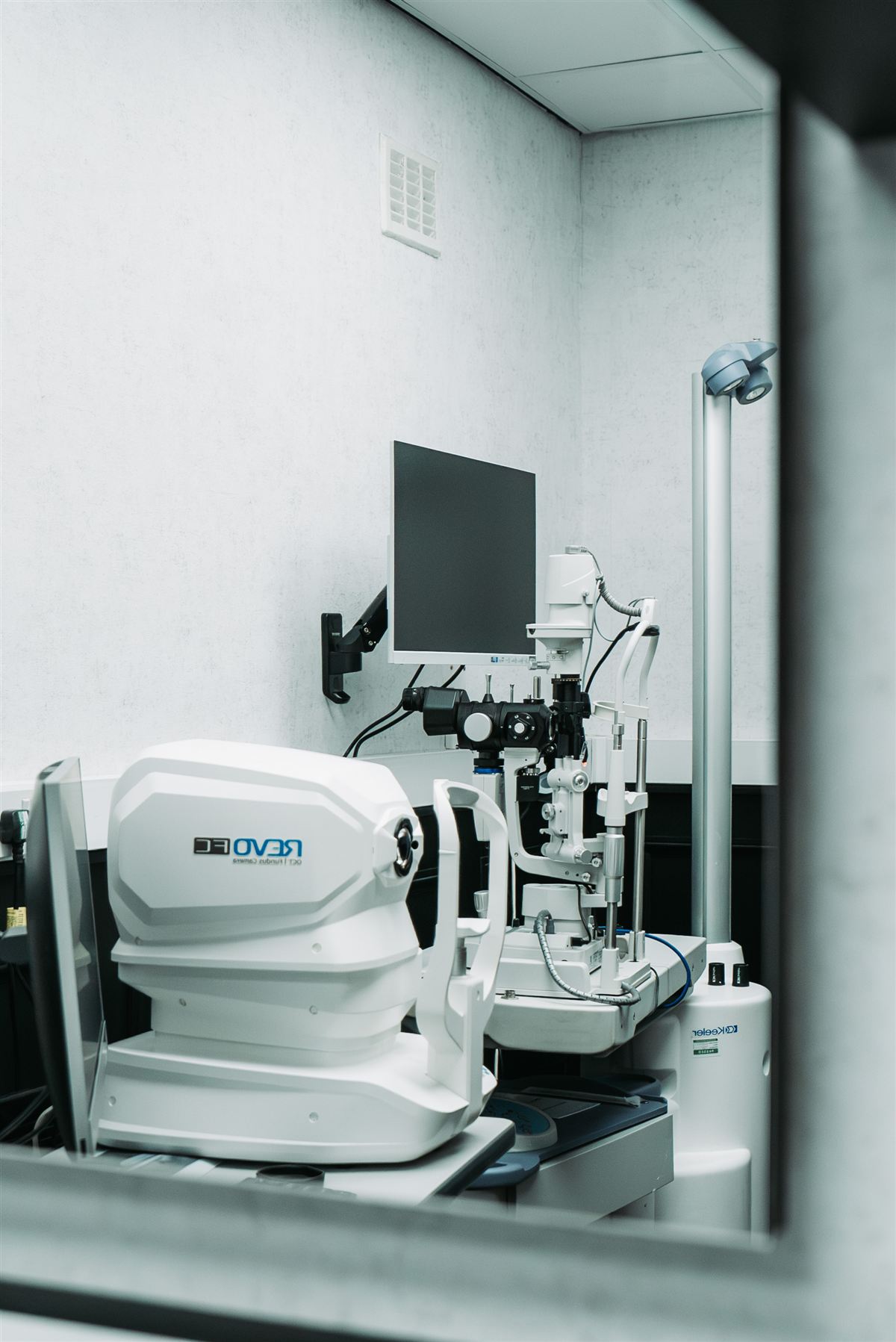
Every specialist fitting starts with a map of your cornea from our SBM Sistemi corneal topographer: the shape of the front of the eye, point by point. The lens is designed from that map, then checked on the eye at the slit lamp.
Measure the eye
The corneal map, the health of the cornea and the white of the eye where the lens will land.
Try lenses on the eye
A scleral lens settles for 20 to 30 minutes before we judge it. Then we check the clearance over the cornea, where it lands, your vision and your comfort.
Agree the plan
Which lens, why, how many visits, and the total cost, before anything is ordered.
From first visit to all-day wear.
- Your story
What is wrong, what you have tried, and how many hours a day you need lenses.
- Map and measure
SBM Sistemi topography and a slit-lamp check of the cornea and the white of the eye.
- Trial lenses
Settled on the eye, then clearance, landing, vision and comfort checked.
- Order
Made to measure for your eye, once you agree the design and the price.
- Teaching
Filling, insertion, removal and cleaning, at your pace.
- Refine
Small design changes until vision and comfort are right. Usually three to five visits.
- Review
Regular checks of the eye and the lens, with a new map each time.
Hand-painted lenses for an eye that looks different.
After an injury, an illness or from birth, one eye can look different from the other: a larger or irregular pupil, a change in iris colour, a scar. We design custom hand-painted soft and mini scleral lenses, matched to the other eye in colour and detail, so the two eyes look the same. Around 60 colours and shades are available, and each lens is priced for the case.
TV, film and media: we also design specialist lenses for productions. Get in touch if you need something made.
Three patients, shared with their permission.
Ortho-K beyond the usual range
The problem. He was short-sighted at about -9.00 and had been told Ortho-K could not correct him, because his prescription was beyond the range it is normally used for.
What we did. We mapped his corneas and designed a two-stage plan. A first custom Ortho-K lens reduced his prescription from about -9.00 to -5.00. Once that was stable, a second design took him from -5.00 to plano.
The result. His eyes took about three weeks to adapt. He now sees clearly all day without glasses or daytime lenses, and he is very happy with the result.
A larger pupil after an injury
The problem. An injury to one eye had left that pupil much larger than the other. The difference was noticeable, and they found us online looking for a hand-painted lens.
What we did. We designed a custom hand-painted soft lens, replaced once a year. The painted iris is matched to the colour of their own eye, with a pupil the same size as the other side.
The result. The pupils now look the same size and the eye looks natural. Nobody can tell they are wearing a lens.
Matching eyes for a wedding day
The problem. A medical condition had changed the colour of one iris, and she was getting married.
What we did. We designed a custom hand-painted mini scleral lens, matched to the colour of her other eye. It was made for appearance rather than to correct her sight.
The result. Her eyes matched again, on her wedding day and since.
Ray-Ban Meta glasses for a patient with sight loss.
Our Middleton team spent four hours setting up Ray-Ban Meta smart glasses for a patient who had lost much of her sight, so she could read bus numbers, signs and printed information again. Read the Optometry Today article →
The fitting and the lens, kept separate.
| Specialist assessment and fitting (keratoconus, irregular cornea, scleral, mini scleral, RGP) | £200 |
| Scleral and mini scleral lenses | From £1,800 a pair |
| Corneal RGP and other custom lenses | Quoted for your lens design |
| Spreading the cost of scleral lenses | Flexible Direct Debit available; we explain the exact terms before you go ahead |
| Follow-up and aftercare | Part of the service; we confirm what is included before you go ahead |
The £200 is the clinical service. The lens cost is separate and depends on the design your eye needs. We explain the likely total before any custom lens is ordered, and you are never asked to choose an expensive lens before we know it is the right one. The aim is the least complicated lens that genuinely solves the problem.
Specialist fitting at Middleton. Ask at any practice.
Specialist keratoconus, scleral and complex contact lens fitting is done at our Middleton practice, 36 Long Street, Middleton M24 6UQ (Monday to Friday 9:00am to 5:30pm). Ring Middleton on 0161 653 0771, or ask at any of our practices and we book you in there.
Also: all contact lenses · Ortho-K · dry eye clinic
Scleral lens questions
What is a scleral lens?
A large rigid gas permeable lens that rests on the white of the eye and vaults over the cornea, with saline filling the space underneath. It gives a smooth, stable surface to see through.
What is the difference between a mini scleral and a full scleral lens?
Size. Mini sclerals are roughly 15 to 18 mm and suit most irregular corneas; full sclerals are 18 mm and over and are used for the most irregular eyes and some surface disease.
Are scleral lenses comfortable?
Most people find them more comfortable than small rigid lenses, because the lens doesn’t touch the cornea and moves very little. Handling takes some practice.
Why does my vision cloud during the day?
Debris can build up in the saline under the lens. Taking it out, refilling and replacing it clears it; we can also adjust the fit to reduce it.
Can scleral lenses help dry eye?
In selected severe cases, yes, because the cornea sits in fluid all day. For ordinary dry eye, we treat the cause first at our dry eye clinic.
Can you make a lens to match my other eye?
Yes. We design custom hand-painted soft and mini scleral lenses, matched in colour and detail, priced for each case.
How much do scleral lenses cost?
The specialist assessment and fitting is £200. Scleral and mini scleral lenses are from £1,800 a pair, with flexible Direct Debit. Hand-painted lenses are priced for each case.
Where is the clinic?
At our Middleton practice, 36 Long Street. Ring 0161 653 0771, or ask at any of our five practices.
Tell us what you need.
Ring our Middleton practice to book the specialist assessment, or email us about a hand-painted or production lens.