
Dry eye · after surgery
Dry eyes after cataract or laser eye surgery
Your operation went well and your vision is clearer, yet the eye feels gritty, tired or watery. That is common, and it usually settles. Here is why it happens, how long it tends to last, and when it is not dry eye at all.
By Sohail Khan, Optometrist and Director, who has dry eye himself · Checked by Abra Arshad, Optometrist and Clinical Director · Updated 12 October 2026 · 11 min read
Dry eye is one of the most common side effects of cataract and laser eye surgery. Surgery disturbs the nerves that tell the eye to blink and make tears, and the drops afterwards can irritate the surface. After cataract surgery it usually settles within one to three months. After LASIK it often lasts several months while the nerves regrow. If it doesn’t settle, there is usually a gland problem that was there before. In the first weeks, your surgeon comes first.
On this page
- What dry eye after surgery feels like
- Why surgery dries the eye
- Cataract, LASIK, LASEK or SMILE: which dries the eye most?
- How long does dry eye last after surgery?
- Why mild dry eye before surgery can feel much worse after
- Why laser surgery was never an option for me
- Planning surgery? Treat dry eye first
- What helps after surgery
- Signs that are not dry eye: call the surgical unit today
- When you don’t need us, and when you do
- Questions people ask
What dry eye after surgery feels like
- My vision is better but the eye feels scratchyThe operation has done its job. The surface of the eye is still recovering.
- Things blur, then clear when I blinkThe tear film breaks up between blinks. A blink smooths it out again.
- It waters more than beforeIrritated eyes send out extra watery tears, which do little for the dryness.
- I had a bit of dryness before, now it’s much worseSurgery often brings an existing problem to the surface. More on this below.
Compare with the usual dry eye symptoms if you are unsure. Gritty and uncomfortable is common. Painful, very red, or vision getting worse is not, and needs your surgeon the same day.
Why surgery dries the eye
Every blink spreads a thin tear film over your eye. Closest to the eye is a sticky mucus layer that helps tears cling. In the middle is the watery layer. On top is a thin oil layer, made by the meibomian glands along your lid edges, which stops the water evaporating.
The cornea, the clear window at the front of the eye, is packed with nerves. They notice the surface drying and trigger a blink and more tears. Surgery interrupts that loop in several ways at once:
- Nerves are cut. Any cut in the cornea cuts some nerves. The eye feels less, blinks less and makes fewer everyday tears. The nerves grow back, but slowly.
- The surface is disturbed by the bright light, the antiseptic and the eye being held open.
- The drops afterwards. After cataract surgery you usually use antibiotic and steroid drops for about four weeks. They protect the eye, but many contain a preservative, which can irritate the surface.
- Healing inflammation, which unsettles the tear film, and the oil glands, which studies have found work less well for a while after cataract surgery.
For everything else that can dry the eyes, read what causes dry eyes.
Cataract, LASIK, LASEK or SMILE: which dries the eye most?
The more corneal nerves an operation cuts, the more likely dry eye is, and the longer it lasts. This is the general pattern. Your surgeon can tell you what to expect from your exact operation.
| Operation | What happens | Dry eye, generally |
|---|---|---|
| LASIK | A thin flap is cut across the cornea and the laser reshapes the tissue under it. The flap cuts many nerves. | The most dry eye, lasting longest. |
| PRK or LASEK | No flap. The surface skin is removed, the laser reshapes the cornea, and the skin regrows. | Generally less than LASIK longer term, though the first days are often sorer. |
| SMILE | A small disc of tissue is shaped inside the cornea and removed through a keyhole cut. | Generally less than LASIK in most studies. It still happens. |
| Cataract or lens surgery | Two or three tiny cuts at the edge of the cornea, then the lens inside is replaced. | Common, but usually milder and shorter. Drops and oil glands play a bigger part. |
How long does dry eye last after surgery?
Nobody can give you an exact date, but there is a usual pattern.
After cataract surgery
It is usually worst in the first week or so. In one study of routine cataract surgery, dry eye was most common at one week, much less common by one month, and most people were back to normal by three months. Many notice an improvement once the four weeks of drops stop.
After laser eye surgery
The NHS says sore, dry-feeling eyes after laser surgery normally improve within a few months. After LASIK the nerves take longer, and for many people dryness eases gradually over six to twelve months. A smaller group are left with dry eye beyond a year.
The biggest reason it lasts longer is dry eye or blocked glands before the operation. Blepharitis, rosacea, long contact lens wear and lots of screen time add to it. For the longer view, read does dry eye go away?
Why mild dry eye before surgery can feel much worse after
Many people tell us their eyes were “a bit dry” before, or fine. Then, after surgery, the dryness is far worse than they expected.
The usual reason is meibomian gland dysfunction (MGD): the lid glands get blocked and the oil layer thins. It is very common from middle age, and lots of people have it without knowing, because the nerves and watery tears make up the difference. Surgery takes away that cover. The operation didn’t create the gland problem. It revealed it.
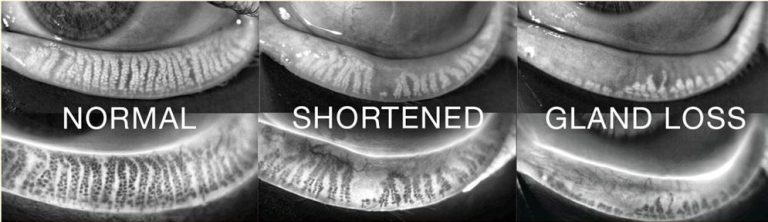
Drops ease it, but if the glands are blocked the cause is still there. See treating blocked oil glands.
Why laser surgery was never an option for me
I have dry eye myself, and laser eye surgery was never an option for me because of it. A good surgeon checks for dry eye first, because an eye that is already dry can do badly afterwards.
So when someone tells me their eyes have felt worse since their operation, I take it seriously. It is very often a problem that was quietly there before, and it can usually be helped once it is found.
Planning surgery? Treat dry eye first
If you have dry eye and surgery is coming, settling your eyes first is one of the most useful things you can do.
Better measurements
Before cataract surgery, the curve of your cornea is measured to choose the power of the new lens. Those readings are taken through your tear film. A study of people planning cataract surgery found that those with unstable tears had more variable readings, and more often a calculated lens power that changed between visits. A smoother tear film gives your surgeon more reliable numbers. Laser surgery is planned from corneal measurements too.
An easier recovery
An eye that starts calm copes better with the healing and the drops. For laser surgery, significant dry eye can mean you are advised against it.
- Tell the surgical team if your eyes are often dry or gritty, even if it seems minor
- Have your lids and glands checked a few months before, so there is time to treat them
- Tell us your surgery date so we can plan around it, and share our findings with your surgeon
Not sure if you have dry eye? Try our 60-second dry eye check. For timing, see when to have cataract surgery.
Surgery coming up, or still dry afterwards?
Every treatment starts with a free consultation with one of our optometrists. We talk through your eyes and plan around your surgery. If you don’t need treatment, we say so.
What helps after surgery
In the first weeks your surgeon’s instructions come before anything here. Check with the surgical team before adding anything new.
1. Follow your surgeon’s drop plan exactly
Use the prescribed drops for as long as prescribed. Don’t stop early because the eye feels fine or because they sting. If you think a drop is making things worse, call the unit and ask.
2. Preservative-free lubricants, if your surgeon agrees
Most surgeons are happy for you to use one alongside your prescribed drops. Leave about five minutes between different drops, and don’t let the bottle tip touch your eye. See which eye drops suit which dry eye.
3. Protect the eye while it heals
Don’t rub it. Wear the night shield if you were given one. Keep fans and heating away from your face, and take screen breaks, because screens cut how often you blink.
4. Warm compresses only when your surgeon says it is safe
Warmth helps blocked oil glands, but pressing on a freshly operated eye is not a good idea, and after LASIK there is a flap to protect. When you are cleared, our home lid routine shows how to do it gently.
5. If it hasn’t settled when it should
Once your aftercare has finished and the dryness is still there, often around three months after cataract surgery and longer after LASIK, have your glands and tear film checked. In-clinic gland treatment or IPL light therapy works on the cause. Every option is on our dry eye clinic page.
Signs that are not dry eye: call the surgical unit today
After eye surgery, contact the unit that did it the same day if you have:
- Pain that is getting worse, not better
- Vision that is getting worse, or suddenly blurred
- An eye that is becoming more red, especially with pain
- New flashes of light, or a sudden shower of floaters
- A dark shadow or “curtain” across your vision
In the early weeks, always go to your surgical unit first. They know your eye, and most give you an emergency number. If you can’t reach them, call NHS 111, or go to A&E if it is severe. Flashes, floaters and a curtain can mean a detached retina. More on flashes and floaters, a red eye and our urgent eye care once your aftercare has finished.
When you don’t need us, and when you do
In the first few weeks, you probably don’t need us. Mild grittiness and watering are expected, and your surgical unit is looking after you.
Book with us if your aftercare has finished and your eyes are still gritty or burning most days, if drops only help briefly, if you have crusty lid edges that may be blepharitis, or if your second eye is due and you want it to go more smoothly.
Questions people ask
How long does dry eye last after cataract surgery?
Usually worst in the first week or two, settling within one to three months. If it is still there after three months, there is often an oil gland problem worth having checked.
How long does dry eye last after LASIK?
Usually longer than after cataract surgery, because the flap cuts more nerves. Many people improve over six to twelve months as the nerves grow back.
Can I use my usual eye drops after surgery?
Ask your surgeon first. Most are happy with a preservative-free lubricant alongside the prescribed drops, but in the early weeks they decide what goes in the eye.
Can dry eye affect my cataract measurements?
Yes. The readings used to choose your lens power are taken through the tear film, and a patchy tear film makes them less consistent. Treating dry eye first helps.
- Dry eye is common after cataract and laser eye surgery
- Cataract: usually settles in one to three months. LASIK: often six to twelve
- Existing oil gland problems are the main reason it doesn’t settle
- Treat dry eye before surgery for more reliable lens measurements
- Pain, worse vision, a very red eye, flashes or a curtain: call your surgical unit today
Still dry after your surgery?
Most people start with EyeRelief, and it starts with a free consultation, at any of our five practices: Cheadle, Heald Green, Middleton, Winsford and Heckmondwike. No referral needed. If you are still under your surgeon’s care, check with them first.
- Gomes JAP et al. TFOS DEWS II iatrogenic report. The Ocular Surface, 2017;15:511–538.
- Gomes JAP et al. TFOS Lifestyle: Impact of elective medications and procedures on the ocular surface. The Ocular Surface, 2023;29:331–385.
- Kasetsuwan N et al. Incidence and pattern of dry eye after cataract surgery. PLoS One, 2013.
- Epitropoulos AT et al. Effect of tear osmolarity on repeatability of keratometry for cataract surgery planning. Journal of Cataract and Refractive Surgery, 2015;41:1672–1677.
- NHS. Cataract surgery (recovery and when to get help).
- NHS. Laser eye surgery and lens surgery.