
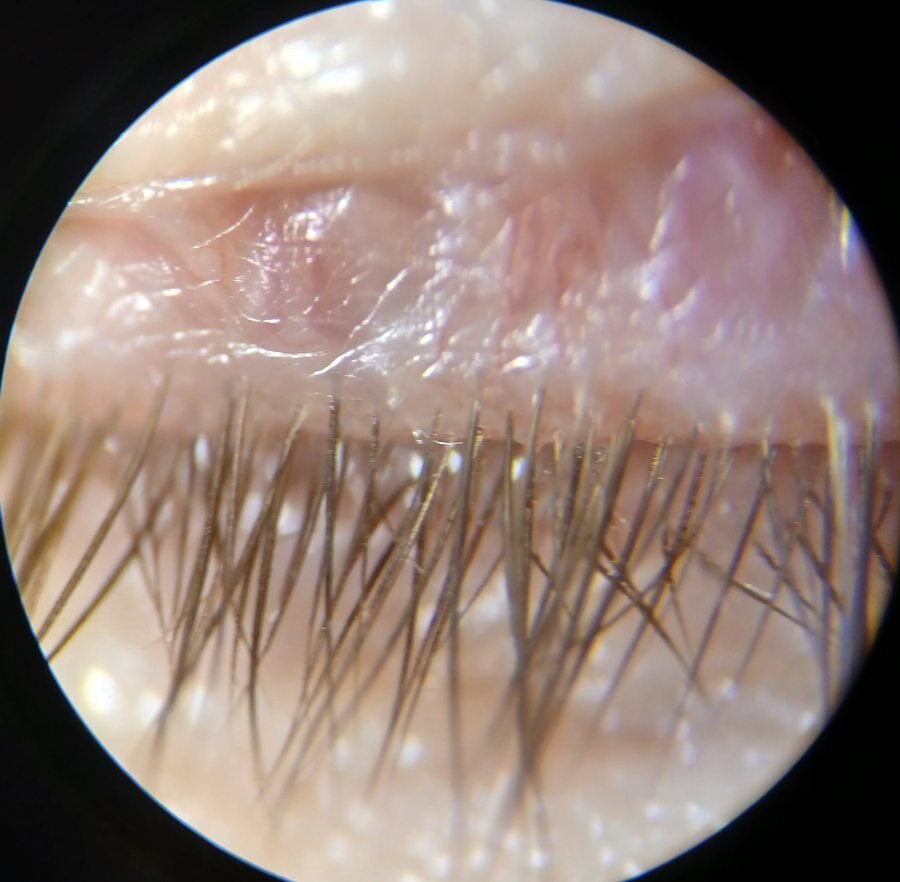
Dry eye · blepharitis
What is blepharitis? Symptoms, causes, treatment, and is it contagious?
Sore, red, crusty lid edges that keep coming back. What is going on, why it travels with dry eye, what you can do yourself, and when it needs more than a wipe.
By Sohail Khan, Optometrist and Director, who has dry eye himself · Checked by Abra Arshad, Optometrist and Clinical Director · Updated 13 October 2026 · 13 min read
Blepharitis is inflammation of the edges of your eyelids, where the lashes grow and the oil glands open. It makes the lids red, sore, itchy and crusty, often worst in the morning. It is not contagious. It is very common, rarely harms your sight, and usually travels with dry eye. Warmth and cleaning the lid edges twice a day control most cases. When it keeps coming back, the cause is usually blocked oil glands, mites or rosacea, and those need treating directly.
On this page
- What blepharitis actually is
- Symptoms of blepharitis
- Is blepharitis contagious?
- Blepharitis and dry eye: why they go together
- What causes blepharitis?
- Why I look at the lids first
- How to treat blepharitis at home
- Blepharitis treatment in the UK: what is available
- How long does blepharitis last, and is it permanent?
- When to get help, and when you don’t need us
- Questions people ask
What blepharitis actually is
Your eyelid edge is a strip of skin only a couple of millimetres wide. The lashes grow from the front of it. Just behind them is a row of tiny openings: the meibomian glands, about 30 in the top lid and 25 in the bottom, which make the oil layer of your tears. Every blink squeezes a little oil out, and that oil stops your tears drying between blinks.
Blepharitis means this strip is inflamed. There are two kinds, and most people have a bit of both:
- Anterior (front) blepharitis affects the lash line. You can see it: flakes, crusts and redness at the base of the lashes.
- Posterior (back) blepharitis affects the oil glands behind the lashes. The oil thickens, the openings cap over and the rim reddens. You feel it more than see it: gritty, burning, tired eyes. This is the same problem as most dry eye, called meibomian gland dysfunction (MGD).
It is one of the most common things an optometrist sees, and more common as we get older. It tends to settle and flare rather than disappear, which is why so many people are told “it’s just blepharitis” and left to manage it for years.
Symptoms of blepharitis
These are the things patients describe in my chair, and what is usually behind each one. Most people have three or four, in both eyes.
- My lid edges are red and soreThe classic sign. The rims look pink or red and can feel tender, swollen or heavy.
- There’s crust in my lashes when I wake upFlakes at the base of the lashes, worst first thing, sometimes gluing them together.
- My eyes feel grittyThe inflamed rim and the poor oil layer leave the surface of the eye dry and rough.
- They itch and burn along the rimItchy lid edges, rather than itchy whole eyes, point to blepharitis and often to eyelash mites.
- My eyes water for no reasonWithout enough oil the tears evaporate, and the eye floods itself with watery tears that don’t help.
- Everything looks blearyBleary eyes means tired, watery eyes with vision that smears and clears when you blink. Blepharitis is a very common reason.
- I keep getting styesInflamed rims and blocked glands make styes and lid lumps more likely.
- My contact lenses feel scratchyLenses sit on the tear film. When the lid edge is inflamed, they dry out.
Other signs are lashes that fall out or grow in odd directions, sensitivity to light and wind, and eyes that are worst on waking. If mornings are your worst time, our guide to dry eyes in the morning explains why.
Is blepharitis contagious?
No. You can’t catch blepharitis from someone, and you can’t give it to anyone, including your partner or children.
Blepharitis is not an infection you pick up. It is your own lid edge reacting to things that live on almost everyone: normal skin bacteria, the oil from your own glands, and in many people tiny mites at the lash roots. Having those is normal. In blepharitis the rim over-reacts to them, or the glands block.
Simple habits still help your own lids: use your own face towel, replace old eye make-up, and don’t share mascara or eyeliner. Those are about keeping your lids clean, not protecting other people.
What can be catching is infective conjunctivitis, which makes the white of the eye red and sticky, often starting in one eye. If one eye suddenly becomes red, painful or very sticky, that is a different problem: see red eye: when to worry.
Blepharitis and dry eye: why they go together
Blepharitis and dry eye arrive together so often that we rarely look at one without the other. They feed each other in a loop:
- The inflamed lid edge irritates the oil glands behind the lashes.
- The glands block, so less oil reaches your tears.
- Without the oil, the tears evaporate in seconds and the eye feels dry, burns and waters.
- The dry surface and the thick oil inflame the lid edge further.
That loop is why drops alone rarely sort it: they add water for half an hour, but they don’t calm the rim or open the glands. It is also why “dry eye” and “blepharitis” are often two names for the same eyes. If you are trying to work out which you have, read blepharitis or dry eye: how to tell.
What causes blepharitis?
There is rarely one cause. These are the usual ones, and most people have two or three together.
| Cause | What it does | What you notice |
|---|---|---|
| Blocked oil glands (MGD) | Thick oil caps the gland openings and inflames the back of the rim | Red rims, gritty and burning eyes |
| Skin bacteria | Normal bacteria build up along the lash line | Flakes and crusts at the lash base |
| Eyelash mites (Demodex) | Microscopic mites at the lash roots, irritating in large numbers | Waxy “collars” at the lash base, itchy lids |
| Rosacea | The inflamed blood vessels that redden the cheeks run along the lid edge too | Red rims, repeated styes, a flushing face |
| Seborrhoeic dermatitis | Flaky, oily skin on the scalp and brows affects the lashes | Greasy flakes on lashes and brows |
| Make-up, lenses, allergies | All irritate the lid edge | Itchy, puffy lids |
Mites matter because ordinary wipes don’t reach them, and they are often why blepharitis keeps coming back: see eyelash mites (Demodex). If your face flushes easily, read rosacea and dry eyes, because treating the skin and the lids together works better than either alone.
Why I look at the lids first
I have dry eye myself. It is the reason I stopped wearing contact lenses, and the reason laser eye surgery was never an option for me. So I know how easy it is to blame the eyes when the problem is often the lids.
When I set up the dry eye clinics at our five practices, the first thing I wanted every optometrist to do was look closely at the lid edge, under magnification, before reaching for a drop. That is where blepharitis hides, and it changes what actually helps.
Lids that keep flaring up?
Every treatment starts with a free consultation with one of our optometrists, in person or on the phone. We talk through what your lids are doing, what is likely causing it, and if treatment isn’t right for you, we say so before anything starts.
How to treat blepharitis at home
For most people, a simple routine done properly controls blepharitis. The NHS and the College of Optometrists both put lid hygiene first, and so do we. Three steps, twice a day:
1. Warmth, for about ten minutes
Gentle heat softens the thick oil and loosens the crusts. Use a heated eye mask, not a flannel. The NHS suggests a warm flannel, but a flannel cools within about a minute, before the oil has had time to soften. A mask holds steady, gentle warmth. See how to do a warm compress properly.
2. A gentle lid massage
Straight after, with eyes closed, roll a clean fingertip along the lids towards the lashes: down on the top lid, up on the bottom. This eases the softened oil out.
3. Clean the lid edges
Use a lid wipe or eyelid cleanser along the base of the lashes, top and bottom. The NHS mentions diluted baby shampoo; many people find it stings and dries the skin, so we prefer a cleanser made for the eyelids. If mites are part of it, a low-strength tea tree product is often used for a few weeks. Our home lid routine for blepharitis walks through it step by step.
While it is flaring, and after
- Leave eye make-up off until the lids settle, and never sleep in it.
- Rest contact lenses while the lids are sore. If lenses have become uncomfortable, see why contact lenses dry out.
- Use a preservative-free drop for the dryness, especially if you use drops more than four times a day. See which eye drops suit which dry eye.
- Blink fully on screens, which cut the blink rate to about a third and let the oil set.
- Keep going when it feels better. Stopping the routine as soon as it settles is the most common reason it comes back.
Blepharitis treatment in the UK: what is available
If the home routine has been done properly for a few weeks and your lids are still sore, there are three routes. They often work best together.
From a pharmacy
Lid wipes and cleansers, tea tree products for mites, heated eye masks, and preservative-free drops. These support the routine; they don’t replace it.
From your GP or an eye doctor
If the lids stay inflamed, a GP may prescribe an antibiotic ointment for the lid edge, or for stubborn back-of-lid blepharitis, a low-dose course of antibiotic tablets for some weeks, which calms the glands as well as fighting bacteria. Severe cases are referred to an ophthalmologist. We don’t prescribe, but we can write to your GP with what we have found.
In clinic
Wipes clean the surface. They can’t empty a blocked gland or reach mites at the lash roots. In clinic, an optometrist can:
- Deep-clean the lid edge with a medical micro-brush that lifts the crusts and collars a wipe leaves behind.
- Warm the glands with controlled heat and clear them by hand, so you see the oil come out. Our EyeClean treatment is three visits over six to eight weeks: see blepharitis treatment in clinic.
- Calm the inflamed blood vessels along the rim with light therapy, when rosacea or repeated re-blocking is driving it: see IPL and red light therapy.
If the glands are the main problem, drops made for the oil layer can help alongside, and MGD treatment in clinic explains how blocked glands are cleared. In-clinic treatment is not usually available on the NHS. Every treatment and its price is on our dry eye clinic page.
How long does blepharitis last, and is it permanent?
Blepharitis is usually long-term but controllable. Most people can get it to the point where they forget about it for long stretches, as long as a routine carries on.
| When | What usually happens |
|---|---|
| The first few days | Mild crusting and soreness often ease with a proper routine |
| Two to four weeks | A lasting difference, if the routine is kept up twice a day. Mites take several weeks |
| After that | A lighter routine keeps it away. It may flare in winter, with screens, or with illness or stress |
What is not reversible is the glands. A gland that stays blocked long enough shrinks, and a gland that has gone does not grow back. That is not a reason to panic, but it is the honest reason to treat blepharitis properly rather than live with it.

For the longer view, see does dry eye go away?
When to get help, and when you don’t need us
Get seen the same day if you have:
- A painful eye, rather than sore lid edges
- Vision that has dropped and doesn’t clear when you blink
- Strong light sensitivity, or one very red eye
- A red, painful eye while wearing contact lenses (take the lens out and leave it out)
- A lid that is swollen, hot and spreading
Call any of our practices for an urgent appointment, or NHS 111. If it is severe and you can’t reach anyone, go to A&E. More in our list of urgent eye signs.
Blur that smears and clears when you blink is common with blepharitis and usually temporary; see can blepharitis cause blurry vision? For lid lumps, see stye or chalazion?
When you don’t need us: if your lids are a little crusty now and then, and a twice-daily routine settles them within a week or two, keep going at home. That is how most blepharitis is meant to be managed.
When it is worth coming in: if the routine hasn’t helped after three or four weeks, if it keeps coming back, if you get repeated styes, or if your eyes are gritty and tired most days. Those usually mean blocked glands, mites or rosacea are involved.
Questions people ask
Is blepharitis contagious?
No. It is not an infection you catch. It is your own lid edge reacting to skin bacteria, oil from your glands or mites that almost everyone carries. You can’t pass it to a partner or child.
Does blepharitis ever go away for good?
Usually not for good, but it can be controlled well, often to the point where you forget about it. It tends to return if the lid routine stops, so a lighter routine carries on once it has settled.
How long does blepharitis take to clear?
Mild crusting often eases within days of a proper routine. A lasting difference usually takes two to four weeks of cleaning the lids twice a day. Mites take several weeks, and blocked glands may need clearing in clinic.
Is blepharitis treated on the NHS?
A GP can advise on lid hygiene, prescribe antibiotic ointment or tablets if it does not settle, and refer severe cases to an eye specialist. In-clinic lid cleaning and gland treatment are not usually available on the NHS.
Does blepharitis cause styes?
It makes them more likely, because inflamed lid edges and blocked glands are what styes and chalazia grow from. Controlling the blepharitis usually means fewer of them.
- Blepharitis is inflammation of the eyelid edges: red, sore, itchy, crusty lids
- It is not contagious. You can’t catch it or pass it on
- It usually comes with dry eye, because the inflamed lids block the oil glands
- Warmth, a gentle massage and cleaning the lid edges twice a day control most cases
- If it keeps coming back, blocked glands, mites or rosacea are usually behind it, and need treating directly
Want to know what is driving yours?
Blepharitis is assessed and treated at all five of our practices: Cheadle, Heald Green, Middleton, Winsford and Heckmondwike. Every treatment starts with a free consultation, in person or on the phone. No referral needed.
- NHS. Blepharitis. nhs.uk/conditions/blepharitis.
- NICE Clinical Knowledge Summaries: Blepharitis.
- College of Optometrists. Clinical Management Guidelines: Blepharitis (lid margin disease).
- Lindsley K et al. Interventions for chronic blepharitis. Cochrane Database of Systematic Reviews, 2012.
- Nelson JD et al. The International Workshop on Meibomian Gland Dysfunction: definition and classification. Investigative Ophthalmology & Visual Science, 2011.
- Craig JP et al. TFOS DEWS II Definition and Classification Report. The Ocular Surface, 2017.