
Guide · contact lens comfort
Why do my contact lenses dry out? And how to fix it.
If your lenses feel lovely in the morning and dry, scratchy or blurry by the afternoon, you are not doing anything wrong, and you do not have to give lenses up. Dryness nearly always has a cause we can find, and a fix.
In two minutes
The short version
- Is it normal?
-
Common, yes. Something you have to live with, no.
- The usual cause
-
Tears that evaporate too fast, often from blocked oil glands in the eyelids.
- What makes it worse
-
Screens, heating and air conditioning, long days, and older lenses.
- What helps today
-
Blink breaks, rewetting drops made for lenses, and shorter wear on bad days.
- What fixes it
-
The right lens for your eyes, and treating the dry eye underneath.
The problem
What people tell us about dry contact lenses.
- “My lenses feel great in the morning and awful by four.”
- “I keep reaching for eye drops.”
- “My vision goes blurry at the computer.”
- “I take my lenses out as soon as I get home.”
- “I thought I’d just have to stop wearing them.”
- “My old lenses never used to feel like this.”
Every one of these has a reason, and nearly always a fix. You should not have to count the hours until you can take your lenses out.
Why us
Our optometrists fit and check contact lenses every day at all five practices, and we run a dry eye clinic too, so we look at your lenses and your tears together.
4.9 ★ from 600+ Google reviews
“The optician undertook a thorough examination and covered more areas than I expected.”Patient survey
The reasons
Why contact lenses dry out
A soft contact lens holds water, and it sits in your tears. When your tears evaporate too quickly or there are not enough of them, the lens dries, and you feel it.
- Your tears evaporate too fast.
The most common reason. Tiny oil glands along your eyelids make an oily layer that stops your tears evaporating. When those glands block, the tears dry out, and so does your lens.
- You blink less at screens.
When you concentrate on a screen you blink less often, and many blinks are only half blinks. The lens dries between them.
- The air around you.
Central heating, air conditioning, car heaters and long flights all dry the air, and your lenses with it.
- The lens itself.
Some materials hold moisture better than others through a long day, and a stiffer lens with a thicker edge rubs more as it dries. An older design, or a lens worn past its replacement date, dries sooner. Why you can feel the edge of some lenses →
- How long you wear them.
Wearing lenses for longer than your eyes are comfortable with is a common reason they feel dry by the evening.
- Your health and medicines.
Hormone changes, including the menopause, and some medicines, such as antihistamines, can reduce your tears. Dry eyes and the menopause →
What helps
What helps, starting today
Small changes make a real difference while we find the cause.
- TodayBlink on purpose
Every twenty minutes at a screen, close your eyes gently and fully a few times.
- TodayUse the right drops
Rewetting drops made for contact lenses, not drops for red eyes.
- This weekGive your eyes a rest
Glasses in the evening, and a lens-free day now and then.
- This monthGet your lenses checked
We look at how your lens sits, your tears and your oil glands, and put it right.
What we do
What we check, and how we fix it
- Your tears and oil glands.
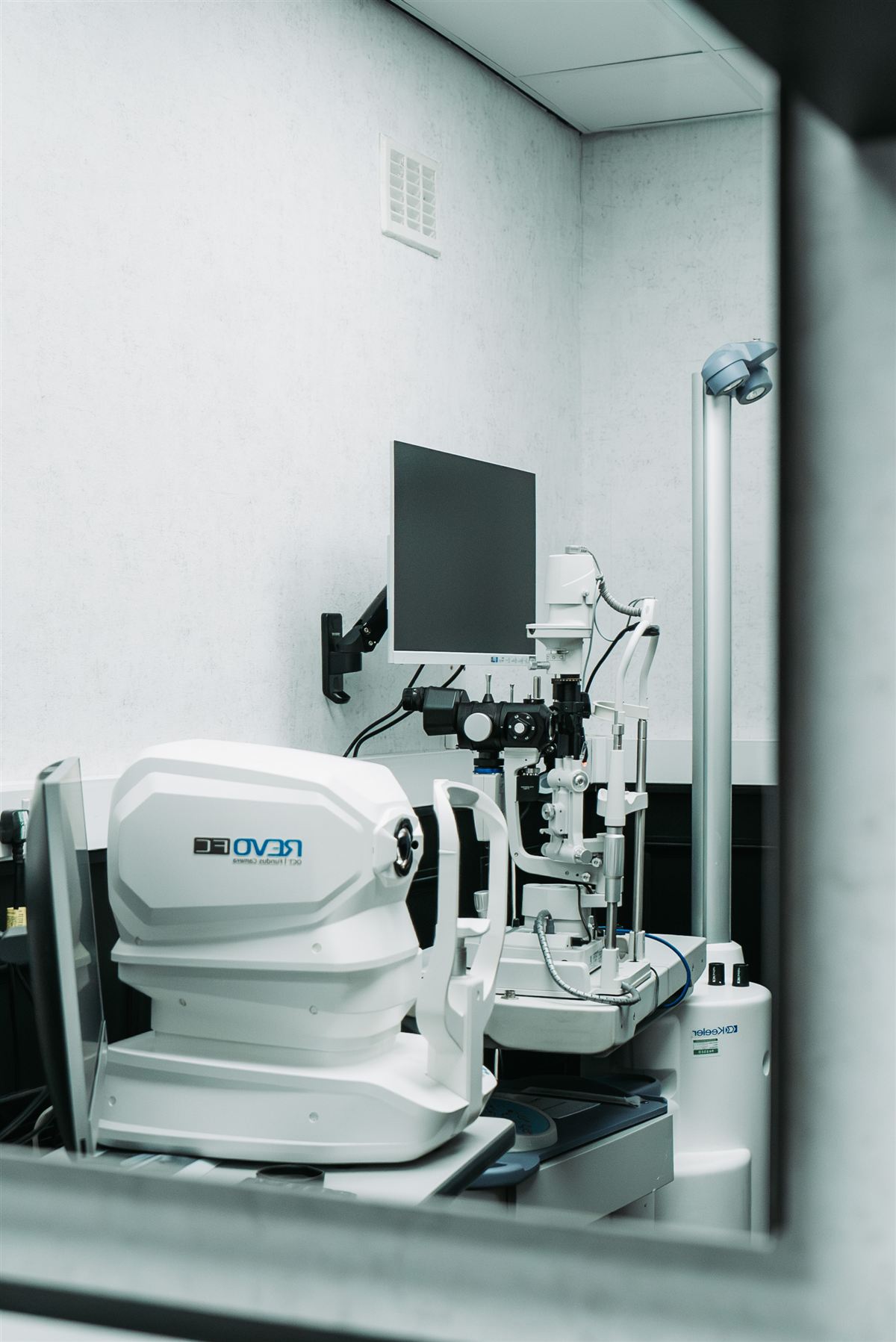
Under the microscope, and with gland imaging, we can see whether your tears are evaporating too fast and why. If it is dry eye, we treat it. Our dry eye clinic →
- How your lens sits.
A lens that is too tight or too loose, or worn past its date, dries and irritates. We check the fit and the lens.
- Whether a different lens would suit you better.
Modern daily lenses are designed to hold their moisture for a long day. Our first choice of daily lens →
- Your routine.
Which solution you use, how you clean your lenses, and how long you wear them. Small changes often help most.
If your eye is red, painful, sensitive to light or suddenly blurry, take the lens out, do not put it back in, and ring us the same day. Urgent eye care →
The plan
How we get your lenses comfortable again
- 1Book a contact lens check
Whoever fitted your lenses. An aftercare check is £70.
- 2We find the cause
Your tears, your oil glands, the lens and how it sits, all looked at together.
- 3We put it right
A different lens, dry eye treatment, or a change to your routine, and we check again.
What you get. Lenses that feel as good at the end of the day as they did in the morning.
Put up with it, and you end up wearing lenses less and less, and counting the hours until you can take them out.
Find the cause, and you wear your lenses all day without thinking about them.
Near you
Get your lenses checked near you
At all five practices, whoever fitted your lenses.
Contact lens checks in Cheadle
Abra & Co, 19 Wilmslow Road, Cheadle SK8 1DW
Five minutes from Cheadle Hulme and Gatley, ten from Stockport and Didsbury, fifteen from Wilmslow.
Contact lens checks in Heald Green
Ashworth Opticians, 214 Finney Lane, Heald Green SK8 3QA
Five minutes from Gatley, ten from Wythenshawe, fifteen from Sale and Altrincham.
Contact lens checks in Middleton
Abra & Co, 36 Long Street, Middleton M24 6UQ
Eight minutes from Heywood, ten from Chadderton and Blackley, fifteen from Rochdale, Oldham and Prestwich.
Contact lens checks in Winsford
Winsford Eye & Footcare, 27 Delamere Street, Winsford CW7 2LX
Ten minutes from Northwich and Middlewich, twenty from Knutsford, Crewe and Nantwich.
Contact lens checks in Heckmondwike
Armitage Opticians, 14 Market Street, Heckmondwike WF16 0JU
Eight minutes from Cleckheaton, ten from Dewsbury, Batley and Mirfield, twenty from Morley.
The three types of dry eye, and what we do for each
Most people are told “you’ve got dry eyes” and handed drops. But there are three different causes, and each needs something different. Most people have a mix.
Blocked oil glands: meibomian gland dysfunction (MGD)
About 8 in 10 people with dry eye have this. Along the edge of each eyelid are about 30 tiny glands that put a thin layer of oil on your tears. When they block, your tears dry up in seconds, however much water your eyes make. It feels gritty, burning and tired, often worse on screens or by evening. Drops help for an hour, because they don’t unblock the glands.
What we do: photograph your glands so you can see them, warm and clear them in clinic, clean the lid edge, and use IPL or light therapy where it helps. Then we give you a simple routine for home.
Not enough tears
Your eyes don’t make enough of the watery part of tears. This is more common with age, some medicines, the menopause, and conditions like Sjögren’s.
What we do: measure your tear level, choose the right drops for you, and use tiny plugs to keep your own tears in where they help. We’ll write to your GP if something needs checking.
Inflamed eyelids: blepharitis, often with tiny mites called Demodex
Crusty, itchy, red lid edges, often worse in the morning.
What we do: deep-clean the lid edge in clinic, treat the mites, and show you how to keep the lids clean at home.
Not sure which one you have? That’s what the assessment is for. We look at your glands, tears and lids, and tell you which type, or which mix.
Frequently asked questions
Why do my contact lenses dry out by the afternoon?
Usually because your tears evaporate faster than they should, often from blocked oil glands in your eyelids, or because you blink less at screens. The lens material and how long you wear it each day also matter.
Do eye drops help with dry contact lenses?
Rewetting drops made for contact lenses can help for a few hours. If you need them every day, something else is causing the dryness, and it is worth finding out what.
Are daily lenses better for dry eyes?
Often, yes. A fresh lens every day has no build-up, and some modern daily lenses are designed to hold their moisture through a long day. Daily contact lenses →
Can dry eye stop me wearing contact lenses?
Rarely for good. We look at your tears and the oil glands in your lids, treat the dry eye if it needs it, and choose a lens that suits your eyes.
How long should I wear my lenses each day?
As long as your optometrist has advised, and no longer. If your lenses only feel good for part of the day, tell us, because that is something we can usually improve.