
Contact lenses · comfort · dry eye
My contact lenses have become uncomfortable
Lenses that were comfortable for years and now dry out by lunchtime aren’t a lens problem. Nine times out of ten the tear film has changed — the oil glands in the lids have blocked — and that’s treatable. The other one time is the reason to ring now.
Take them out and ring now if
The eye is red and painful, light hurts, or vision is blurred. That’s a possible infection or ulcer, and it’s same-day.
Otherwise: it’s probably the tear film
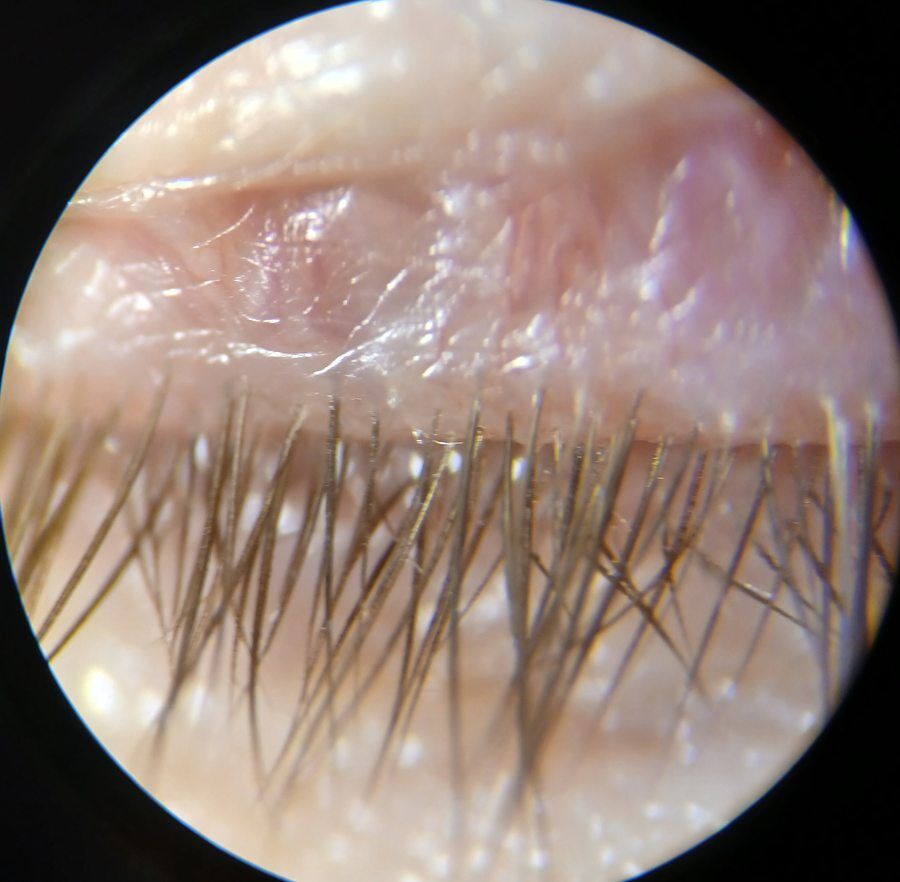
A contact lens sits in the tear film. If the oil layer on top has gone — blocked glands in the eyelids — the tears evaporate off the lens, it dries out, and by the afternoon it’s stuck and scratchy. Switching lens brands helps for a week. Treating the glands helps for good.
The £15 gland scan photographs the glands. If they’re blocked, EyeClean clears them in three visits; most people go back to full-day comfortable wear. If the glands are fine, we look at the lens itself — a different material or a daily disposable often does it.
What to book
The 60-second check first. Then a Dry Eye Assessment at any practice, and a contact lens check alongside it.
The three types of dry eye, and what we do for each
Most people are told “you’ve got dry eyes” and handed drops. But there are three different causes, and each needs something different. Most people have a mix.
Blocked oil glands: meibomian gland dysfunction (MGD)
In one large study, 86% of people with dry eye had signs of this. Along the edge of your eyelids are tiny glands, about 30 in the top lid and 25 in the bottom, that put a thin layer of oil on your tears. When they block, your tears dry up in seconds, however much water your eyes make. It feels gritty, burning and tired, often worse on screens or by evening. Drops help for an hour, because they don’t unblock the glands.
What we do: photograph your glands so you can see them, warm and clear them in clinic, clean the lid edge, and use IPL or light therapy where it helps. Then we give you a simple routine for home.
Not enough tears
Your eyes don’t make enough of the watery part of tears. This is more common with age, some medicines, the menopause, and conditions like Sjögren’s.
What we do: measure your tear level, choose the right drops for you, and use tiny plugs to keep your own tears in where they help. We’ll write to your GP if something needs checking.
Inflamed eyelids: blepharitis, often with tiny mites called Demodex
Crusty, itchy, red lid edges, often worse in the morning.
What we do: deep-clean the lid edge in clinic, treat the mites, and show you how to keep the lids clean at home.
Not sure which one you have? That’s what the assessment is for. We look at your glands, tears and lids, and tell you which type, or which mix.
Five clinics across Greater Manchester, Cheshire & West Yorkshire
Every Book button on this page comes here. Choose your practice — the number appears on the one you pick.
Book a Dry Eye Assessment — Cheadle 0161 428 3717
Book a Dry Eye Assessment — Middleton 0161 653 0771
Book a Dry Eye Assessment — Heald Green 0161 437 3400
Book a Dry Eye Assessment — Winsford 01606 599030
Book a Dry Eye Assessment — Heckmondwike 01924 403617
Gland Scan: £15 with any eye examination (included in our Gold eye examination).