
Single vision · four levels · from £109
Clear glasses, explained properly and priced upfront.
Single vision lenses for distance or reading, from £109. We explain every option in a way that makes sense, show you every price before you choose, and guide you honestly to the lens that’s right for you.

The problem
What people tell us about their last glasses.
- “They went blurry when I looked to the side.”
- “The lenses were thick and heavy.”
- “I had headaches by the afternoon.”
- “I didn’t know the price until I got to the till.”
- “I felt pushed into the expensive lens.”
- “I only wanted new lenses in my old frames.”
Every one of those is fair, and every one of them is fixable.
Why us
Our team fits lenses every day across five practices. We use Zeiss, Hoya, Rodenstock and Essilor, with Hoya our first choice, and we can get almost any lens you need.
4.9 ★ from 600+ Google reviews
“They have plenty of options to choose from that suit all budgets, and they certainly didn’t push for the expensive lines.”Patient survey
How we fix each one
Six problems, six answers.
 “Blurry when I look to the side.”
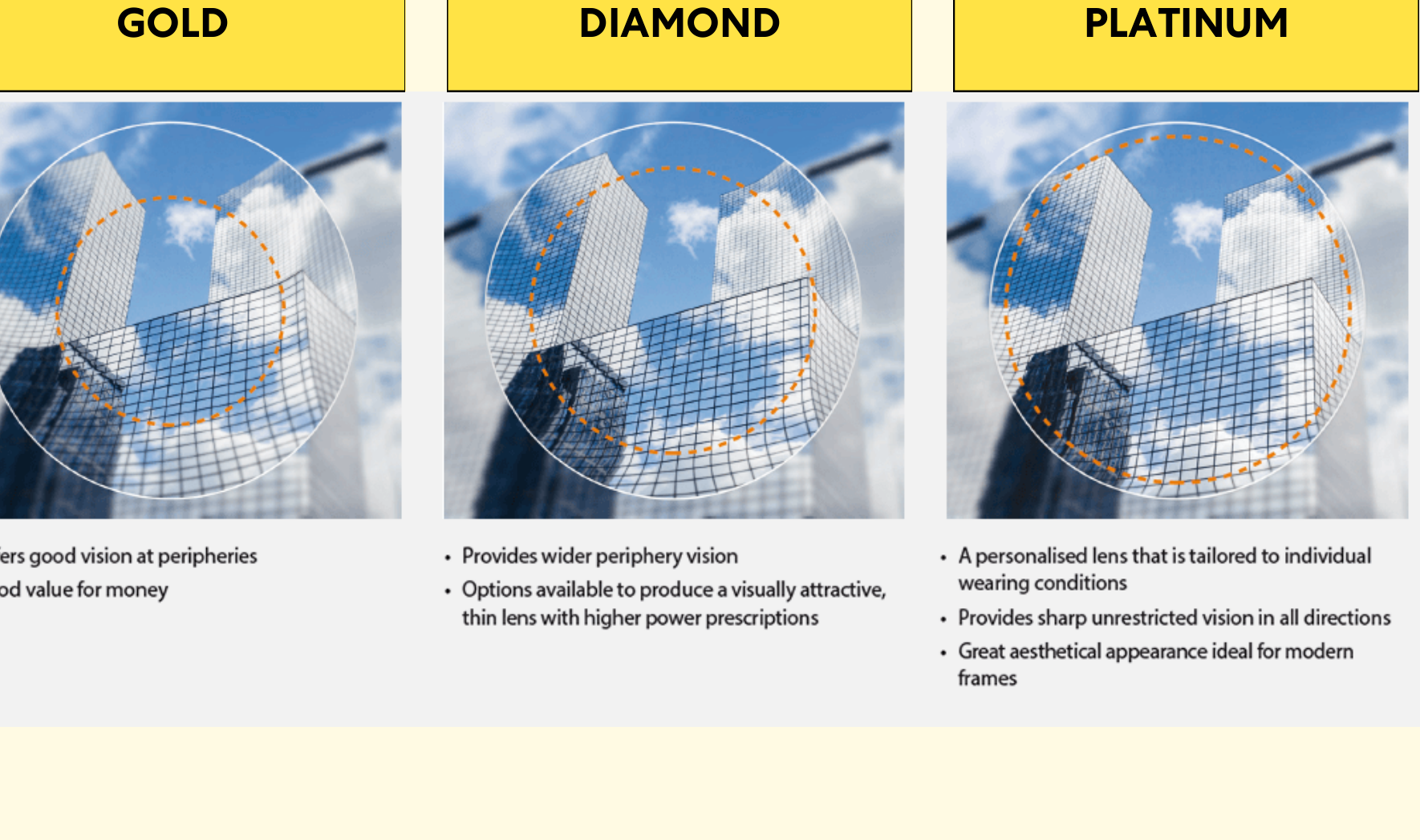
That’s a standard lens. Diamond and Platinum stay sharp much further out, and we’ll show you the difference with pictures.
“I was shown the scans and everything was clearly explained to me.”
 “Thick and heavy.”
A strong prescription needs a thinner lens. We tell you which thickness you need.
 “Headaches by the afternoon.”
It’s the prescription, the lens or the fit. We check all three.
“I was informed of everything that was to happen in my eye test, and it was a very thorough appointment.”
“I didn’t know the price until the till.”
Every level and thickness is on paper before you choose. From £109, or half today and the rest over up to 10 months, interest free.
“I felt pushed into the expensive lens.”
We guide you honestly. We explain each option in a way you understand, you choose, and then we make it happen.
“No pressure to buy anything you did not want.”
“I only wanted new lenses in my old frames.”
Yes, if the frame is sound. We check it first, free.
From £109. Every level and every thickness priced before you choose.
It depends on you
The right lens depends on you, not on a price list.
What you do all day. Screens, driving, reading, work, sport. The lens has to suit your day, not an average one.
How strong it is, whether there is astigmatism, and how it has changed. Stronger prescriptions gain the most from a better lens.
Tell us what you want to spend. We work within it and show you exactly what each option gives you for the money.
Your face, your style, how you want to look and feel in your glasses. They are worn every day, so they should feel like yours.
We take all four into account, explain your options in a way that makes sense, and you choose.
Spread the cost
Interest free: half today, the rest over 4, 6, 8 or 10 months.
On any glasses and lenses, at every practice. Pay half on the day you order, then choose how many months to spread the rest over. No interest, and nothing added.
Single vision · the four levels
The four levels, in plain English
A single vision lens does one job: distance, or reading. All four levels do that job. What you pay more for is how good the picture is.
Sharp from edge to edge, with no soft patches anywhere, and the thinnest, lightest lens we make. If you want the best there is, this is it.
Who it suitsStrong or complex prescriptions. Fashion frames. Anyone who wants the best.
Nearly the whole lens is sharp. A clear step up from a standard lens, and one most people notice straight away. It is what we choose for our own eyes.
Who it suitsMost people.
Sharp in the middle, where you look most, and softer towards the edges. It does the job well, and it costs less.
Who it suitsSimpler prescriptions, smaller frames, spare pairs.
A simple lens for a simple prescription, or a spare pair. The lowest price, and the one the NHS voucher covers in full.
Who it suitsThe simplest prescriptions. Occasional use.
How thin
Four thicknesses, and the one your prescription needs
Standard
Right for most prescriptions under about three dioptres.
Thin and light
For moderate prescriptions, or when the frame is small or rimless and the edge would show.
Extra thin
For stronger prescriptions. The edge stays neat and the weight comes off your nose.
Ultra thin
For the strongest prescriptions. The thinnest, flattest lens we can make.
Coatings, thickness, tints
What gets added to a lens, and which of it we would pay for ourselves
Of everything on this page, this is the one that makes the biggest day-to-day difference for the smallest outlay. A microscopically thin layer that stops light bouncing off the surface of your lens, so it passes straight through to your eye. More light reaches the eye, so your vision is sharper, and the reflections that cause glare disappear: far less dazzle from headlights at night, less glare on screens, and people see your eyes, not your glasses. It is scratch-resistant and blocks UV too. Our higher levels include the premium coating as standard. It is on every pair we would wear ourselves.
Children almost never tell you their glasses are uncomfortable. They do not say “I have got glare”; they look away from the board, rub their eyes, or drift off task. Overhead classroom lights, whiteboards, tablets and screens all bounce back off an uncoated lens as glare and double images that tire young eyes. With the coating those reflections disappear, so your child sees the board, the book and the screen sharply all day, and the lens is far more scratch-resistant and blocks UV. This is not an upsell. It is the standard we would choose for our own children.
The same power in a thinner, lighter lens. Four thicknesses on the price list. Standard is right for most prescriptions under about three dioptres. Above that, and in small or rimless frames, thin and light or extra thin stops the edge thickness showing and the weight sitting on your nose. Ultra thin is for the strongest prescriptions. We tell you which your prescription and frame need before you choose, and we tell you when the thinner one is not worth paying for.
A filter that manages the blue light from screens and the sun, with UV protection built in. Included on our higher levels; an add-on on the others. Fair evidence for less screen glare, weaker evidence for eye health, and we say which you are paying for.
Lenses that darken in sunlight and clear indoors, so you do not need a second pair of sunglasses. Available as standard, fast-changing, or extra dark for people who spend their days outside, on most of our levels.
Highly recommended for everyone who drives, and brilliant in winter. Unlike an ordinary tint, a polarised lens has a filter that blocks the light waves that bounce off wet roads, bonnets and water, so glare disappears rather than dims. As prescription sunglasses, most people never go back to a plain tint.
The plan
How it works
- 1Book an eye test, or bring your prescription
Forty-five minutes with the optometrist, or bring the prescription from your last test.
- 2We explain, you choose
Each level explained in a way that makes sense, with pictures of the difference and every price on paper.
- 3Measured, fitted, sixty days
Measured to the millimetre and fitted to your face. If they’re not right, we change them.
Get it wrong and you squint round the edges of your glasses for two years.
Get it right and you stop noticing them.
Five practices
Book at your nearest practice
All four levels at all five practices. Choose the one closest to you.
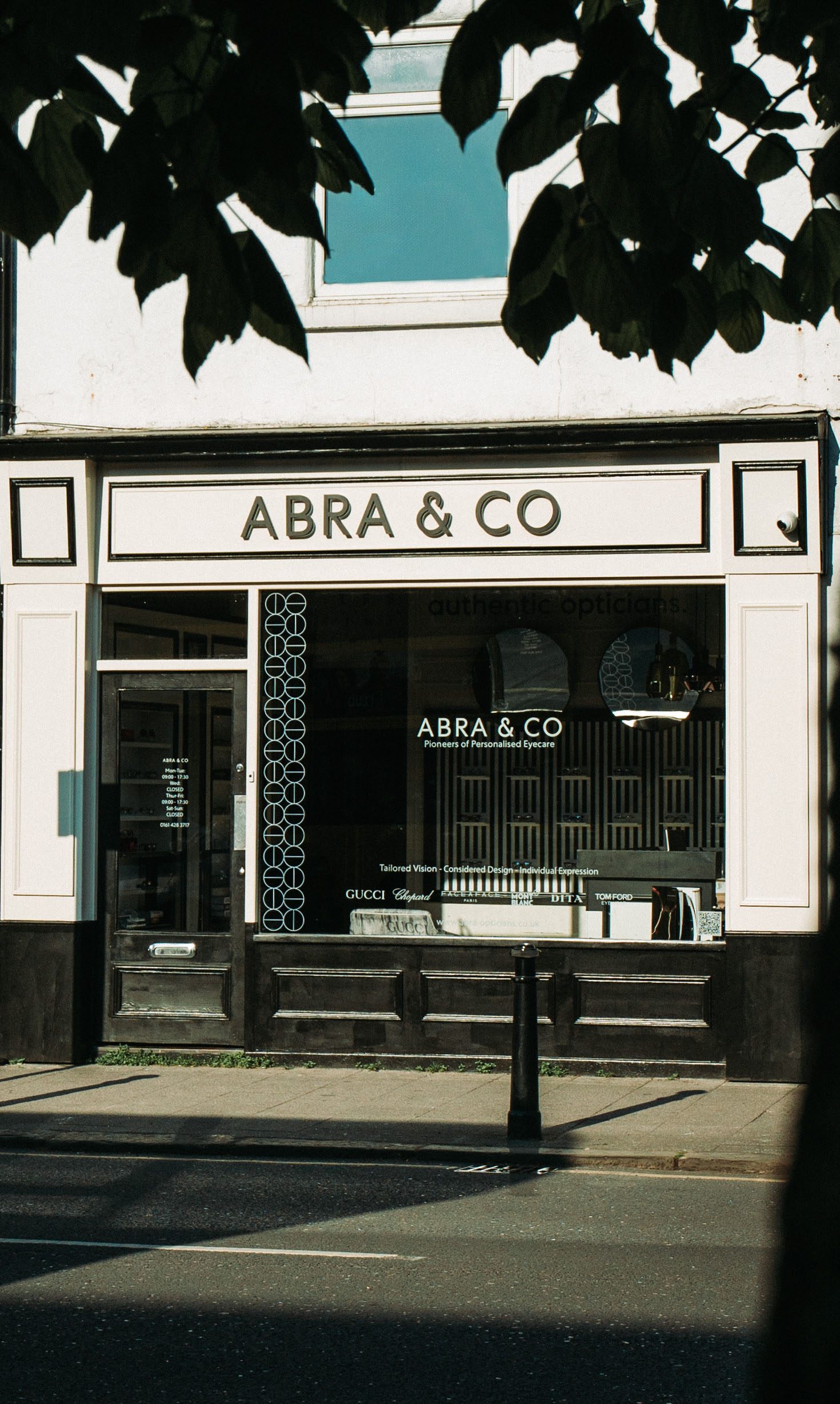 CheadleAbra & Co · 19 Wilmslow Road★ 4.9 · 106 Google reviewsOpticians in Cheadle →
Also near: Cheadle Hulme · Gatley · Bramhall · Stockport
 MiddletonAbra & Co · 36 Long Street★ 4.9 · 164 Google reviewsOpticians in Middleton →
Also near: Heywood · Chadderton · Blackley · Rochdale
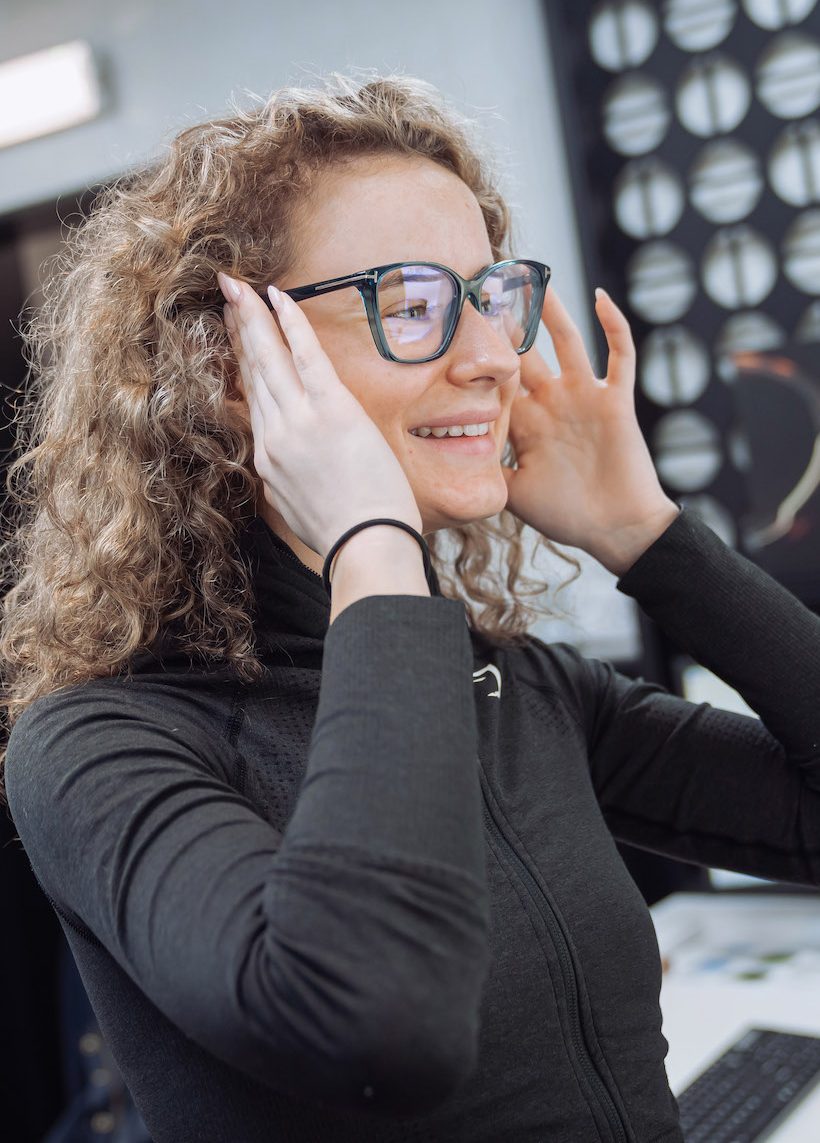 Heald GreenAshworth Opticians · 214 Finney Lane★ 4.9 · 131 Google reviewsOpticians in Heald Green →
Also near: Gatley · Wythenshawe · Sale · Altrincham
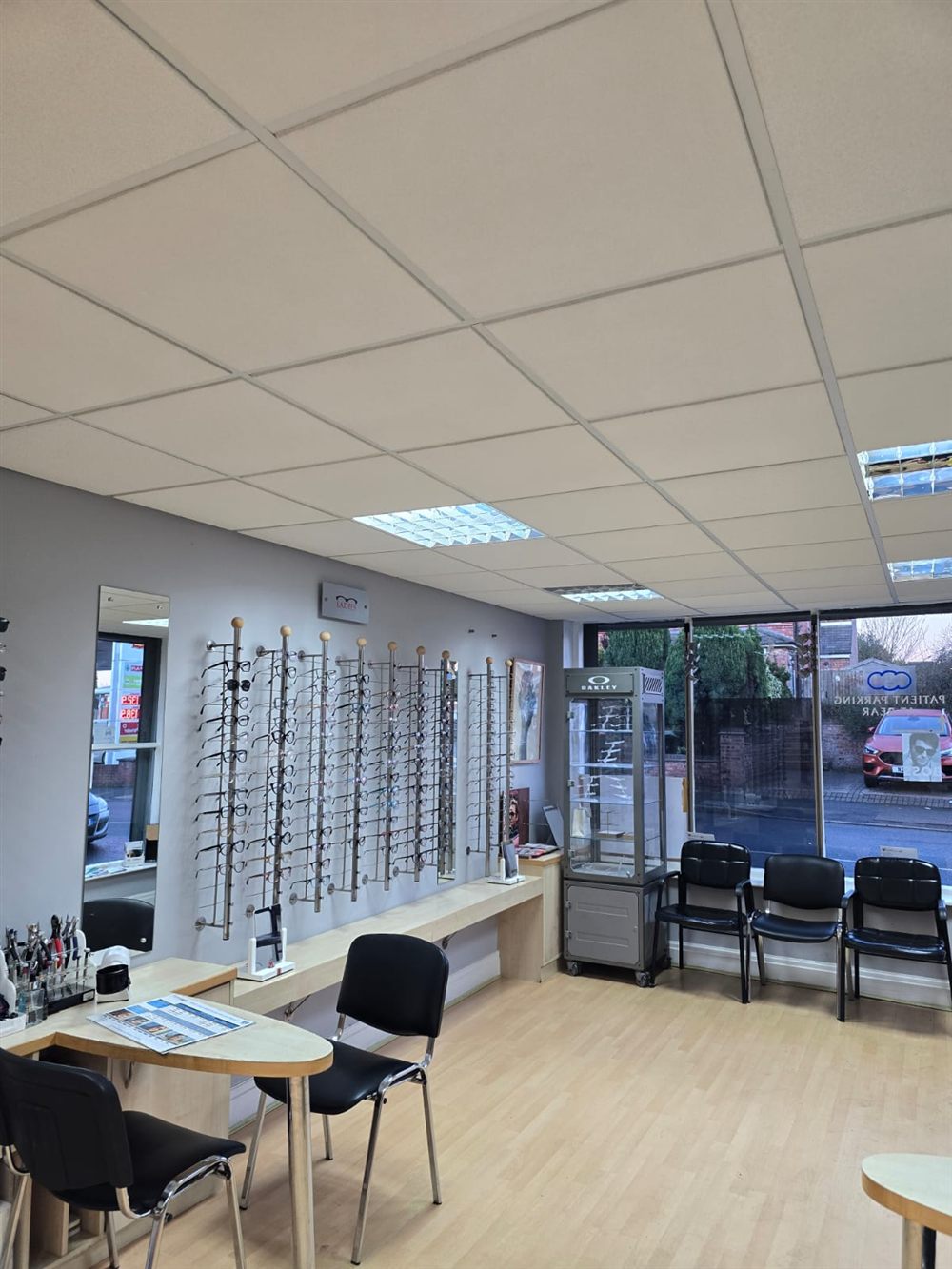 WinsfordWinsford Eye & Footcare · 27 Delamere Street★ 4.9 · 75 Google reviewsOpticians in Winsford →
Also near: Northwich · Middlewich · Knutsford · Crewe and Nantwich
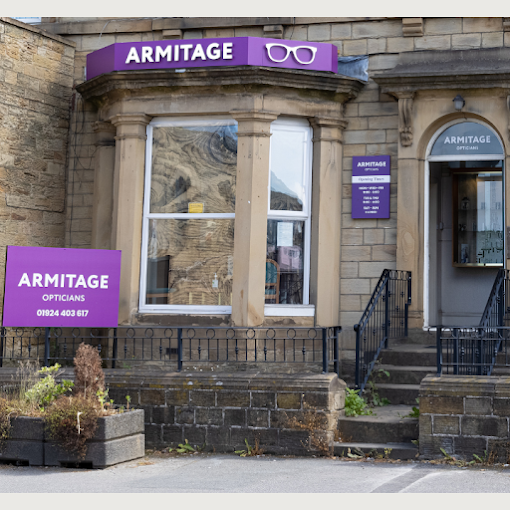 HeckmondwikeArmitage Opticians · 14 Market Street★ 4.9 · 133 Google reviewsOpticians in Heckmondwike →
Also near: Dewsbury · Batley · Mirfield · Cleckheaton
Free on the NHS if you qualify, £55 privately, at every practice. All five, with the towns each one serves →
Frequently asked questions
What is a single vision lens?
A lens with one power across the whole lens: for distance, or for reading, not both. Most people under forty wear single vision.
What is the difference between the four levels?
How much of the lens stays sharp. Silver and Gold are sharp in the middle and softer to the sides. Diamond is sharp nearly to the edge. Platinum is sharp edge to edge and the thinnest and lightest. All four are clear.
How do I know which level to choose?
We guide you. We look at your prescription, your frame and your day, explain each option in a way that makes sense, and show you the difference in the practice. Then you choose.
Can you put new lenses in my own frames?
Yes, if the frame is sound. We check it first, free, and tell you if it will take new lenses.
Do I need thin lenses?
Above about three dioptres, or in a small or rimless frame, usually yes. Below that, standard is normally right. We tell you which.
Can I use my NHS voucher?
Yes. The voucher covers Silver in full, and goes towards any other level.