
Dry eye clinic · Winsford, for mid Cheshire
Dry eye clinic in Winsford
Most dry eye is oil, not water: the glands in your eyelids block, the tears evaporate, and the drops from the chemist last ten minutes. On Delamere Street we photograph those glands, show you what we see, and clear them if they need clearing.
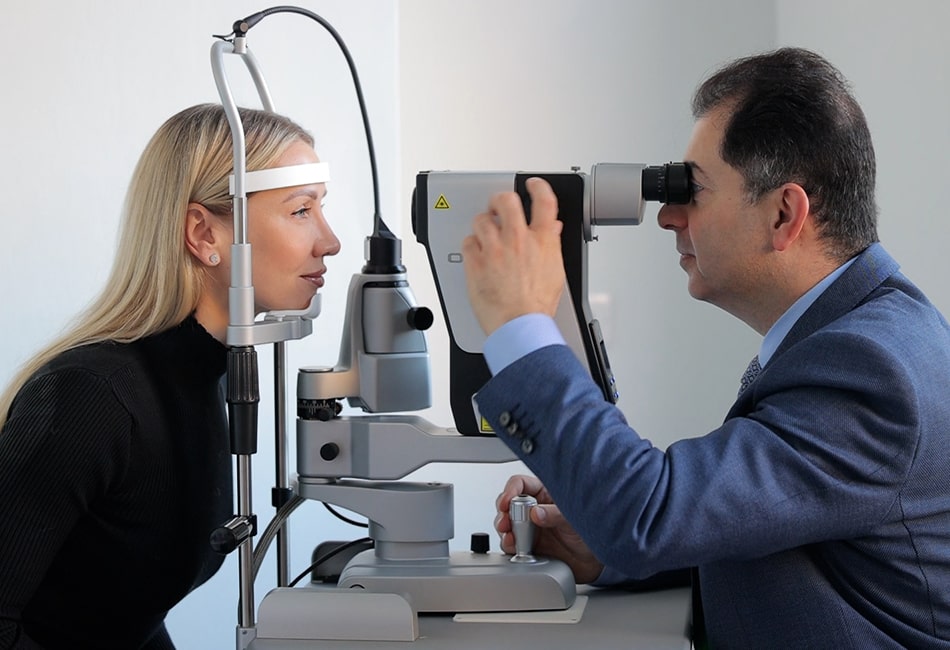
Does this sound like your eyes?
Three of these sound like you? It is almost certainly your glands, and we can show you.
- “Drops from the chemist help for about as long as it takes to walk back to the car.”
- “The screen at work is clear first thing and a smear by three o’clock.”
- “My eyes run in the wind across the salt flats, and in the car with the heater on.”
- “I was told at Leighton it was just dry eye and to keep going with the drops.”
- “I stopped wearing my lenses last summer and have not been back to them.”
- “At night they burn, and I wake with the lids glued.”
- “Warm compresses every evening for a year and honestly no different.”
- “My mum had the same and was told to live with it. I would rather not.”
None of that is in your head, and none of it needs living with. The cause sits in your eyelids, it can be photographed in twenty minutes on Delamere Street, and once you have seen it the plan makes sense.
“Looked after very well, keeping a check on the health of my eyes. Checking blepharitis and dry eye, nothing too much trouble.”
What is actually happening
It is not that you make too few tears. They are evaporating.
The short version. The two types, blepharitis and the full explanation are on our main dry eye page.
- The tear film is water with a film of oil over it. Take the oil away and the water is gone between one blink and the next.
- That oil is made in rows of tiny glands inside your eyelids, and each blink presses a little of it out onto the eye.
- Block those glands and your eyes dry within seconds of blinking, sting, and then run, because a dry eye calls for tears that do no good.
- Drops put water back. Nobody can put oil back with a bottle, which is why the chemist has never fixed this and cannot.
Types of dry eye
The three types of dry eye, and what we do for each
Most people are told “you’ve got dry eyes” and handed drops. But there are three different causes, and each needs something different. Most people have a mix.
Blocked oil glands: meibomian gland dysfunction (MGD)
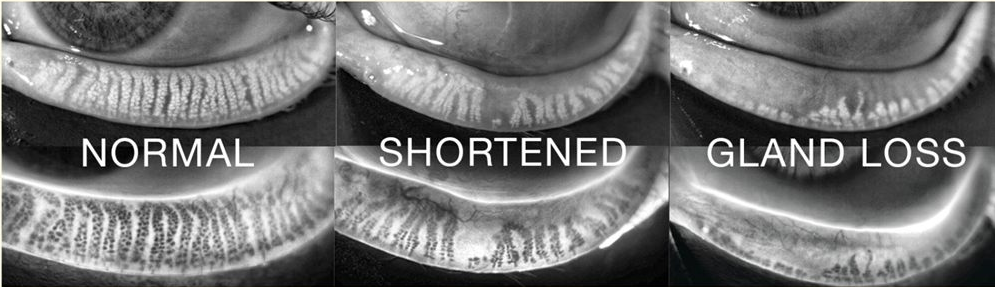
About 8 in 10 people with dry eye have this. Along the edge of each eyelid are about 30 tiny glands that put a thin layer of oil on your tears. When they block, your tears dry up in seconds, however much water your eyes make. It feels gritty, burning and tired, often worse on screens or by evening. Drops help for an hour, because they don’t unblock the glands.
What we do: photograph your glands so you can see them, warm and clear them in clinic, clean the lid edge, and use IPL or light therapy where it helps (IPL at our Cheadle and Middleton clinics). Then we give you a simple routine for home.
Not enough tears
Your eyes don’t make enough of the watery part of tears. This is more common with age, some medicines, the menopause, and conditions like Sjögren’s.
What we do: measure your tear level, choose the right drops for you, and use tiny plugs to keep your own tears in where they help. We’ll write to your GP if something needs checking.
Inflamed eyelids: blepharitis, often with tiny mites called Demodex
Crusty, itchy, red lid edges, often worse in the morning.
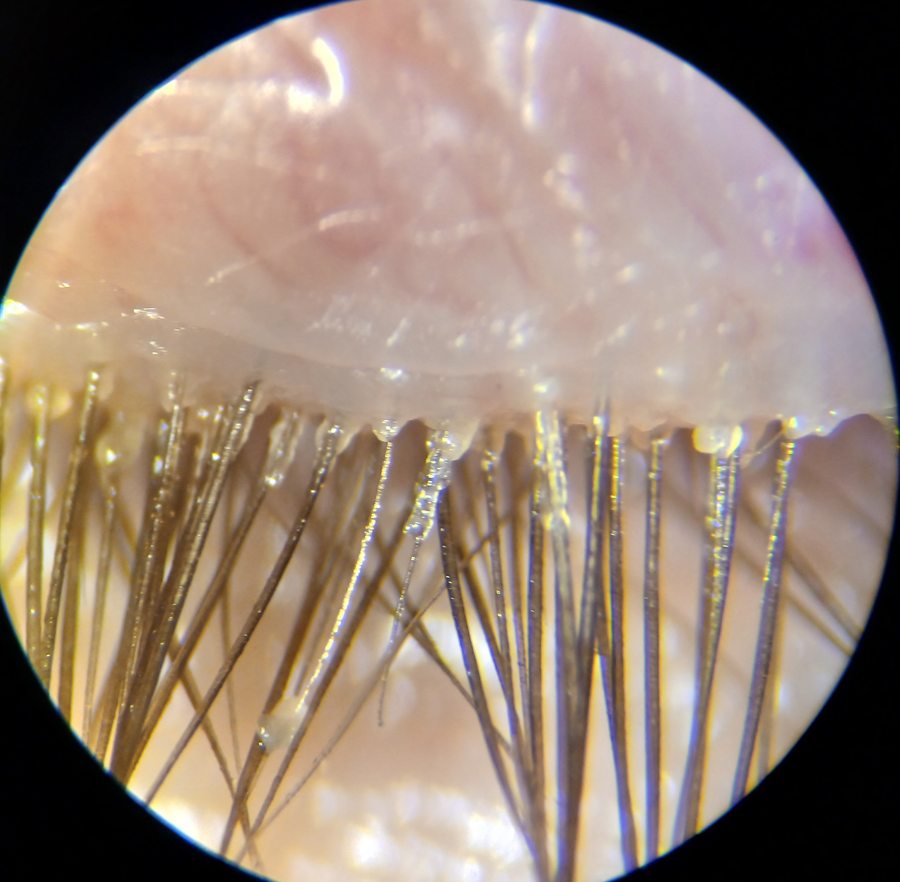
What we do: deep-clean the lid edge in clinic, treat the mites, and show you how to keep the lids clean at home.
Not sure which one you have? That’s what the assessment is for. We look at your glands, tears and lids, and tell you which type, or which mix.
Three ways to start
Three ways to start in Winsford
Know your eyes are a problem? Book the full assessment on Delamere Street and get the whole answer in one visit. Otherwise the Dry Eye Assessment, and treatment can start within the week.
-
You know the treatment you wantBook it onlineEyeClean £480 · EyeRelief £900 · EyeRelief Max £1,495. We check your eyes at the first visit before anything starts.
-
You want to know what is wrong firstDry Eye Assessment, £145 · 30 minTears measured, surface checked, plan on paper
-
You have questionsA call-back from your optometristLeave your number and your optometrist rings you back, usually the same day. No fee, no commitment.
Inflamed lids or blepharitis? Book the Full Dry Eye Assessment, £225. Started with the £145 assessment? It upgrades on the day.
Treatment available within the week. Have your assessment and start treatment the same day, where we can.
Gland Scan: £15 with any eye examination (included in our Gold eye examination). Whichever assessment you book, £50 of it is held against treatment. Every appointment, itemised → · Sixty-second check if you are unsure.
Arrange a call-back with your optometrist
Leave your number. Your optometrist rings you, usually the same day. No fee, no commitment.
Inside the assessment
What the assessment measures, in brief
All of it done here in Winsford, with podiatry under the same roof if you want to make a morning of it.
- First, you: a six-question symptom score, how your day treats your eyes, and a careful look at the lids and the surface.
- Then the tears themselves: how much there is, how long the film survives a blink, and the marks it has left on the eye.
- Then the reason: the lid edge and lashes checked and your blink watched; the full assessment adds gland photographs and the inflammation test. It ends with your results against healthy and a plan on paper.
The assessment is £145; with the inflammation swab it is £225. Either way £50 of it is taken off treatment. Each measurement, and why it matters →
The first appointment
Your first visit to Delamere Street
Car park opposite, ten minutes from Winsford station, and nothing to decide on the day.
- We sit down and we measure. Thirty minutes: how much tear you make, how long it holds, and what the surface shows under dye.
- A plan you can read. Written down, with the options and the prices. £50 of the fee comes off treatment.
- Started inside a week. Often the same day, if you want to begin straight away.
Treatment
What treatment costs at Winsford Eye & Footcare
The assessment decides the treatment, not a menu. These are the three courses and what they cost, so nothing is a surprise. £50 of your assessment comes off whichever you choose. Pay in full, or half today and half at your next visit.
Treatment available within the week. Have your assessment and start treatment the same day, where we can.
- EyeClean £480 the core treatment: three sessions, lids cleaned, glands cleared
- EyeRelief (most recommended) £900 our most recommended course: four IPL sessions and an EyeClean
- EyeRelief Max £1,495 for blepharitis too: five IPL with red and blue light, four EyeClean
- Plugs · Lacrifill £320 · £520 keep your own tears on the eye longer
Single sessions: EyeClean £195 · IPL £295. IPL is at our Middleton and Cheadle practices. The other practices refer to them.
What happens at each level, in detail → · The full price list →
 Before
 After
AfterRead more: why nothing else worked, and how the two conditions connect
Where our dry eye patients travel from
We’re at 27 Delamere Street in the middle of Winsford, with the Delamere Street car park opposite. Podiatry runs in the same building, which is why the name says footcare — the eye clinic is a full opticians and has been for years.
Winsford
On the doorstep. Most of our dry eye patients here started as eye-test patients who mentioned their eyes had been gritty “for ages” and had assumed it was age.
Northwich
Ten minutes up the A533. The nearest gland imaging to Northwich is here.
Middlewich
Ten minutes. Salt-works town, dry air in a lot of the workplaces — we’ll ask about your working day, because it matters more than people expect.
Sandbach
Twenty minutes down the A533 and over the M6.
Crewe
Twenty minutes. If you’re on the list at Leighton, we can see you meanwhile and write to them.
Nantwich
Twenty-five minutes.
Knutsford
Twenty minutes along the A556. Closer than Cheadle for most of Knutsford.
Warrington
Half an hour up the M6 or the A49. For Warrington patients we are usually the nearest independent clinic doing gland imaging.
Runcorn
Half an hour.
Stoke-on-Trent
Thirty-five minutes up the M6. Tell us when you book that you’re travelling — we’ll try to put your assessment and first treatment in one visit so it’s one trip, not two.
Newcastle-under-Lyme
Half an hour. Junction 16 and straight up the A500 side — most Newcastle patients find it quicker than getting into Manchester.
Who drives to Winsford for this
- Northwich, Middlewich and Sandbach, ten to fifteen minutes, where the nearest gland imaging is otherwise a hospital appointment months away.
- Crewe and Nantwich, where people have usually been through two or three brands of drops before somebody suggests looking at the glands.
- Warrington, Runcorn and the M6 corridor: long days on the motorway or a depot scanner halve the blink rate, and the oil sets in the gland.
- Stoke and Newcastle-under-Lyme, an hour away, usually on a recommendation, and usually with the assessment and the first treatment done in the same visit.
- Anyone under Leighton or the Royal Stoke who wants to know where they stand while they wait.
- Menopausal women, CPAP users and lens wearers who gave up their lenses without ever being told why.
If your eyes are only dry in a cold snap and none of that is you, a good drop and a warm compress may be all you need, and we will say so at the assessment.
Your first twenty minutes here
We ask what your eyes do and when. The optometrist measures your tears, checks the surface of the eye with dye and looks at your lashes, and you look at the pictures together on the screen. If all is well, that is what you are told. If not, you are shown where, and what it means, before treatment is even mentioned.
The Dry Eye Assessment is half an hour: a symptom score, tear break-up time and volume, surface staining, the lashes and lid edge, each result shown against healthy, and a written plan. The full assessment, three quarters of an hour, adds gland photographs and the inflammation test. The plan leaves with you. So does the decision.
What it costs, without the small print
The assessment is £145, or £225 with gland photographs and the inflammation test; £50 of either is credited to any treatment. EyeClean, the three-session course that clears the glands, is £480. Pay in full, or half today and half at your next visit. The NHS does not fund any of it, and we would rather you knew that now.
If a treatment is not in the price list above, we do not do it.
Getting here
27 Delamere Street is in the town centre, with the Delamere Street car park directly opposite. Winsford station is a ten-minute walk, on the Crewe–Liverpool line, and the town-centre bus stops are two minutes away. Step-free access from the street.
Done here, and done at Middleton or Cheadle
The assessment, EyeClean, plugs and Lacrifill are all done on Delamere Street. IPL and light therapy run at our Middleton and Cheadle practices, about an hour up the M6. If the assessment says you need it, we book it and send your results ahead, and you will know that before you pay for anything.
Crusted, sore or red lid edges are usually blepharitis, treated here as part of the same programme. The blepharitis page sets out the three kinds and what each one needs.
Reviews
What people in Winsford say
4.9★★★★★
G 75 Google reviews of the Winsford practice
“The assistant was extremely helpful with my glasses problem and did manage to sort it out for me”June Waring · Google review · August 2022
“A fantastic opticians.friendly service lovely staff nothing is to much trouble.the best eye check up I’ve ever had .can not recommend them highly enough.thank you.”Robert Jones · Google review · May 2021
Book
Book at Winsford Eye & Footcare
Every booking link on this page goes to Winsford Eye & Footcare on Delamere Street, and the phone number rings our desk there.
Treatment available within the week, and the same day as your assessment where we can. No referral, no GP letter.
Frequently asked questions
Which assessment should I book?
Most people start with the Dry Eye Assessment, £145. If your lids are inflamed or the optometrist recommends it, the Full Dry Eye Assessment gives you the whole answer in one visit: every measurement, the gland photographs, your results against healthy and a written plan. £50 of it is credited to treatment.
Does my doctor have to refer me?
No. Book online or ring Delamere Street.
Can I have this on the NHS?
No. The NHS sight test covers your vision and the health of the eye, not gland imaging or dry eye treatment. Every price is shown before you decide, and treatment is available within the week.
I’m under Leighton or the Royal Stoke for my eyes. Can I still come?
Yes, and tell us who you’re under so we can write to them. Many patients use us while they wait for a hospital appointment.
What is the wait in Winsford?
Treatment is available within the week. Driving from Stoke, Warrington or Crewe? Say so and we will try to do the assessment and the first treatment in one visit.
Do you do IPL in Winsford?
IPL and light therapy run at our Middleton and Cheadle practices in Greater Manchester. If your assessment says you need it, we arrange it and send your results ahead. Everything else — assessment, EyeClean, plugs, Lacrifill — happens here.